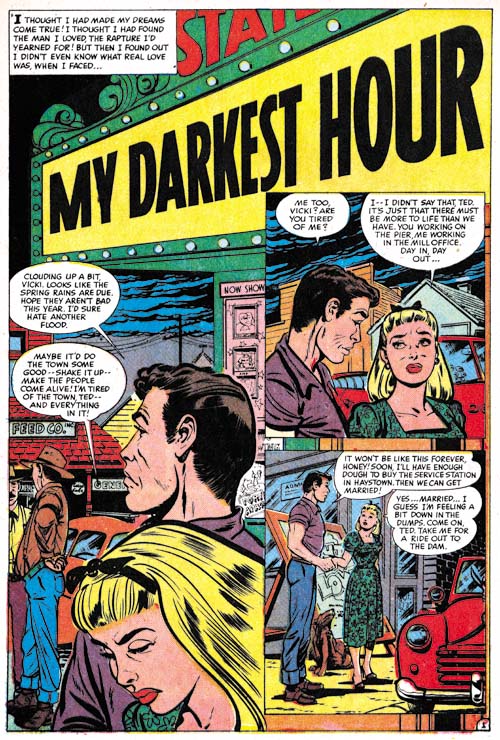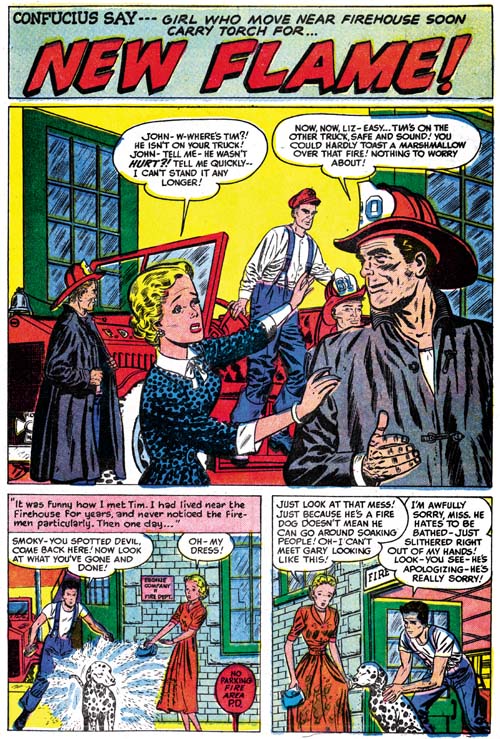

In Love


(August 1954 – November 1954: Young Romance #72 – #74, Young Love #60 – #62, Young Brides #18 & #19, In Love #1 & #2)

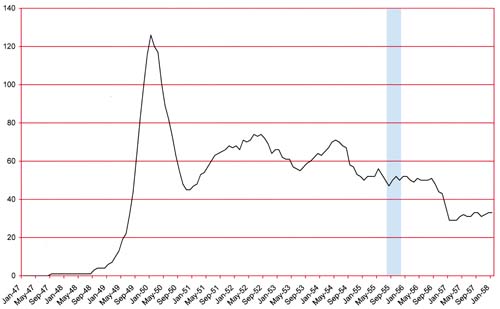
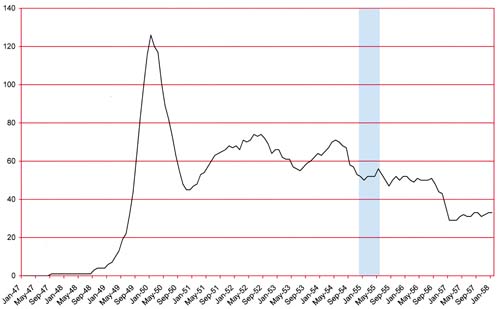
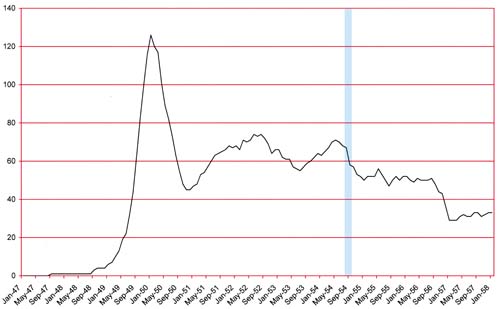
Number of Romance Titles 1947 - 1958
Number of Romance Titles 1947 – 1958 (the period covered in this chapter is shaded in blue)

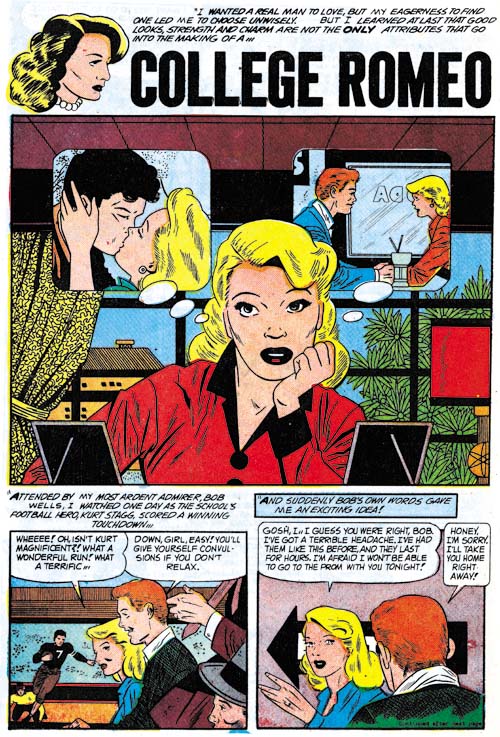
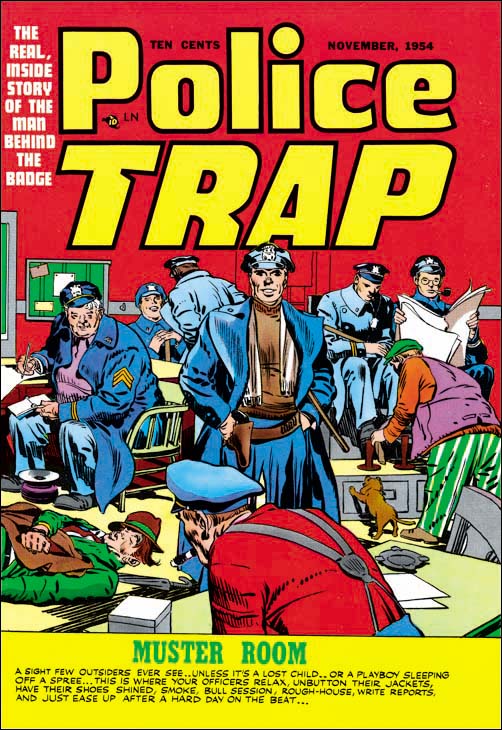
As can be seen in the above chart romance comics had entered into a decline during this period. Did Joe Simon and Jack Kirby notice this? Had they been observant they might have for as will be shown they benefited from the failure of other titles. But then again there were always fluctuations in the number of titles and publishers so perhaps Joe and Jack were not aware that things had become very different. Or perhaps they were too caught up in their own business to notice the bigger picture. August 1954 (cover date) marked the release of Bullseye the first title for Mainline, Simon and Kirby’s own publishing company. In Love, the romance title for Mainline, would be released in September. Starting their own publishing company was a big step for Simon and Kirby but unfortunately their timing was particularly bad.

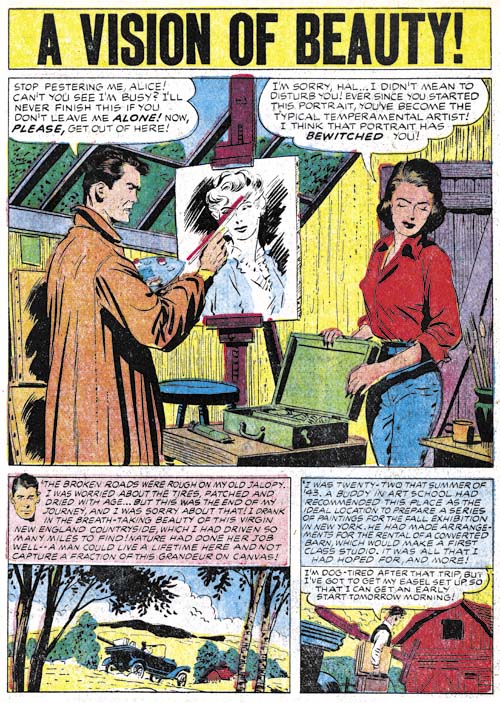
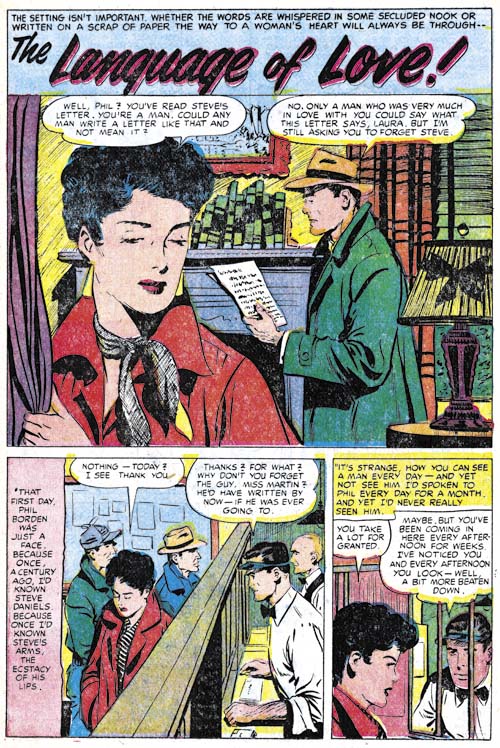
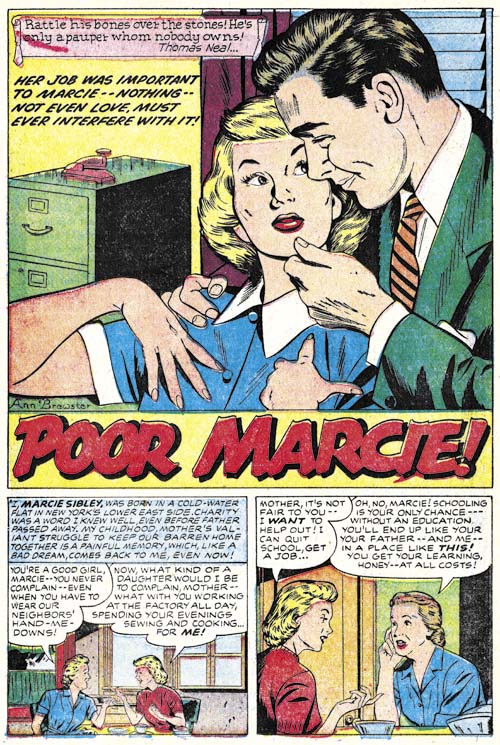
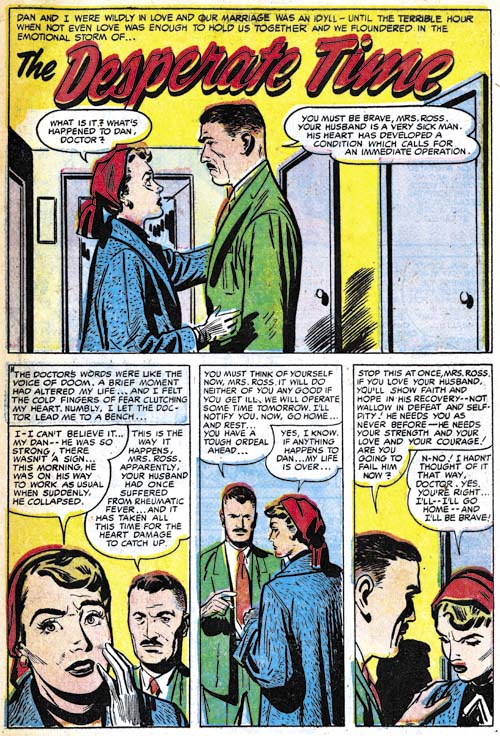
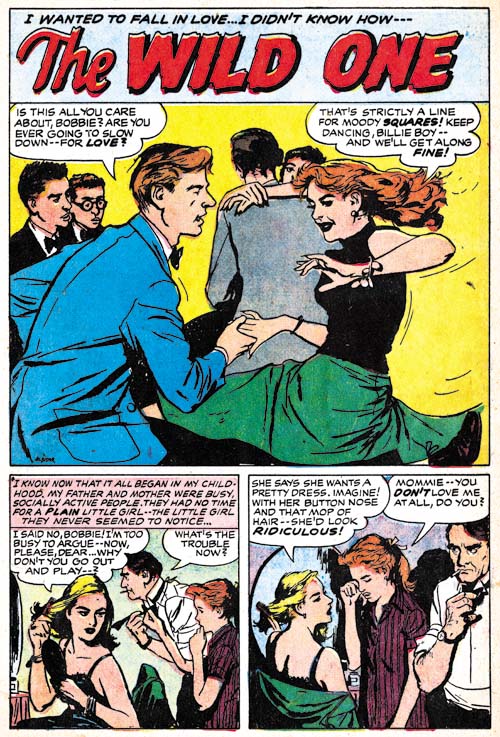
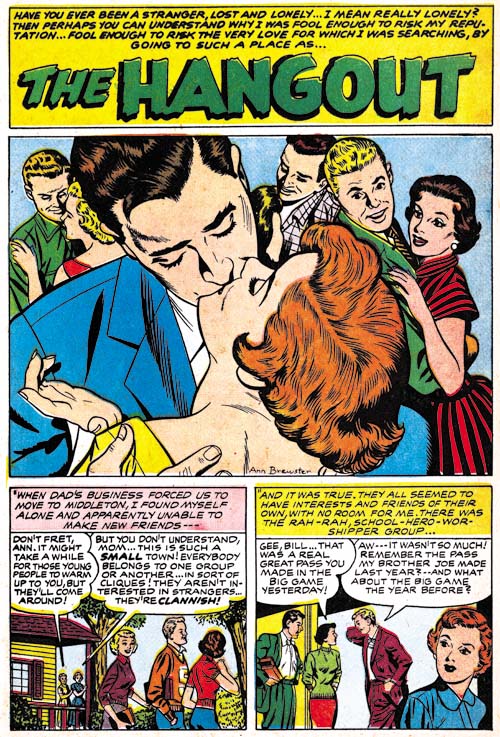
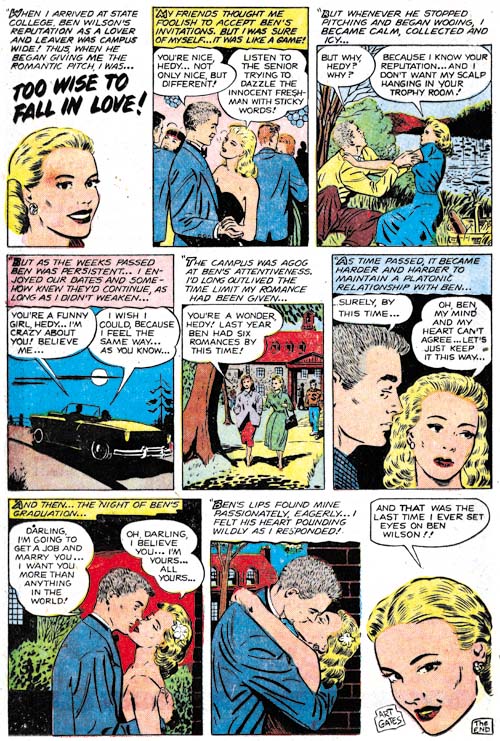
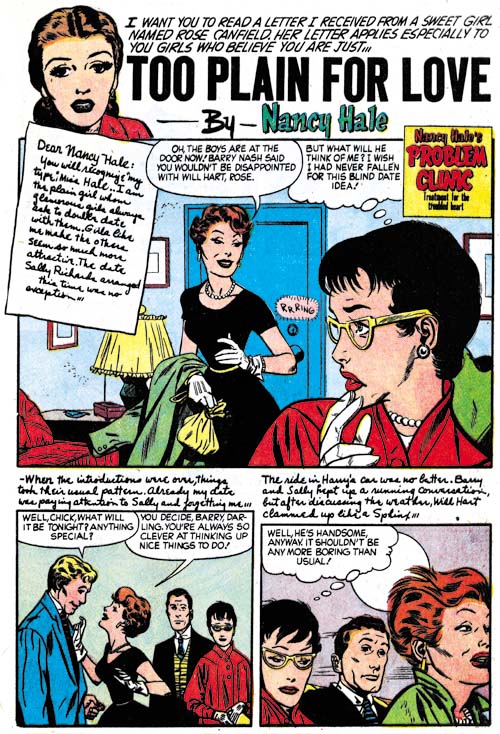
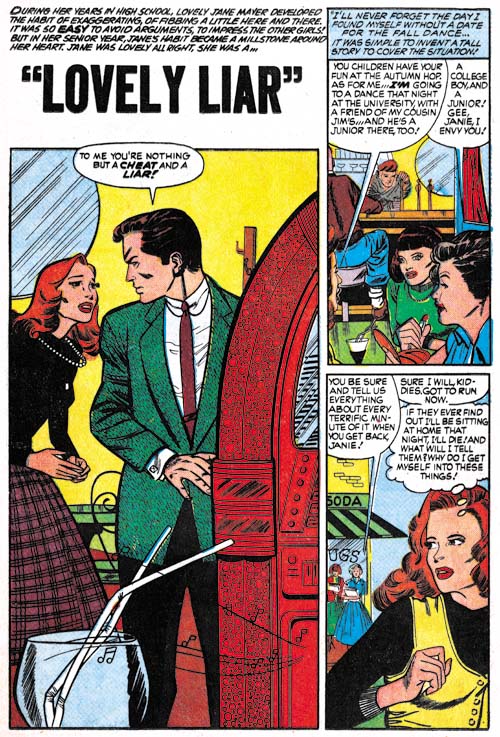
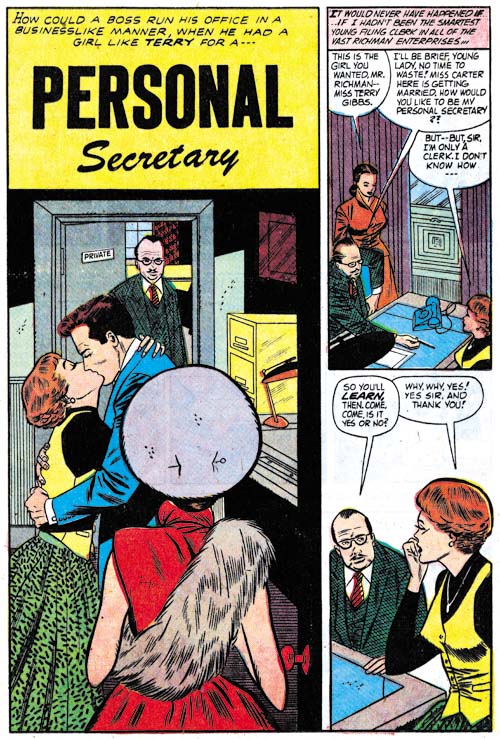
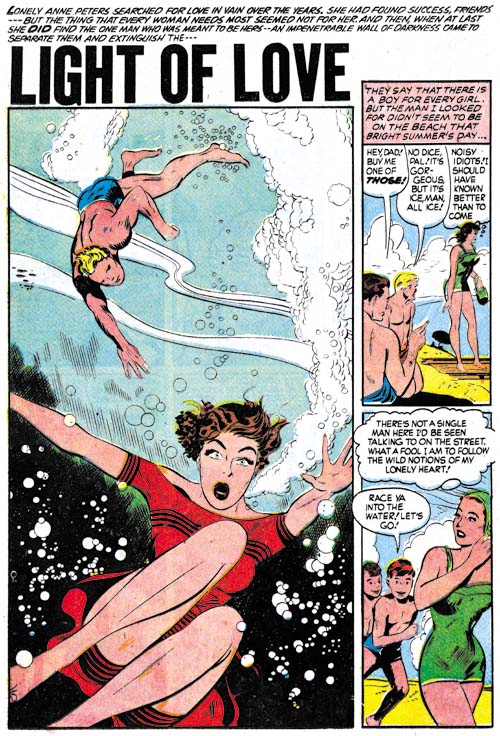
In chapter 27 I noted the appearance of some new artists in the Simon and Kirby productions (unfortunately as of yet unidentified). The art covered in the last chapter was created by 8 artists which in itself was an increase over the earlier period. I have identified 12 artists for the period covered by this chapter and that does not include unidentified artists. There are more pages of unattributed art than those by any identified artist. Frankly I have not sorted them all out but I believe that there are at least 5 or 6 artists that I cannot identify. A couple of these additions to the studio had appeared previously in Simon and Kirby productions and almost all would only provide a few pieces before disappearing from the studio. Oddly one artist, Bob McCarty, who played an important part in the two previous chapters, is completely missing in this one. However McCarty will be returning in future chapters.

The artist line-up based on their productivity was Bill Draut (42 pages), John Prentice (41 pages), Jack Kirby (25 pages), Mort Meskin (20 pages), Art Gates (19 pages) with Leonard Starr and Jo Albistur tied (12 pages). The rest of the artists provide a single story or a small number of single page features. There are 65 pages by unidentified artists but as I wrote above these were distributed among 5 or more artists.

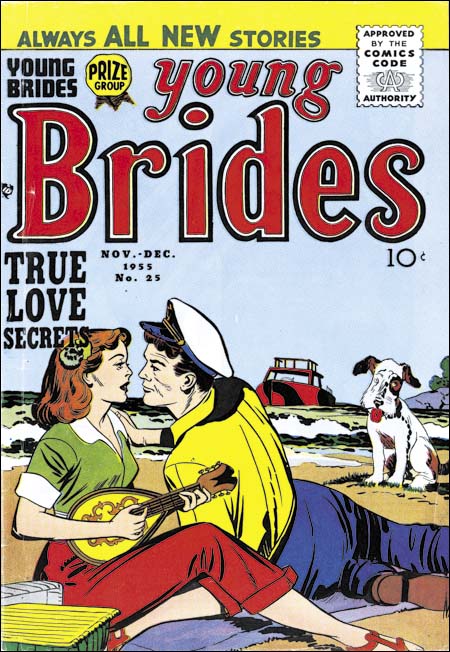
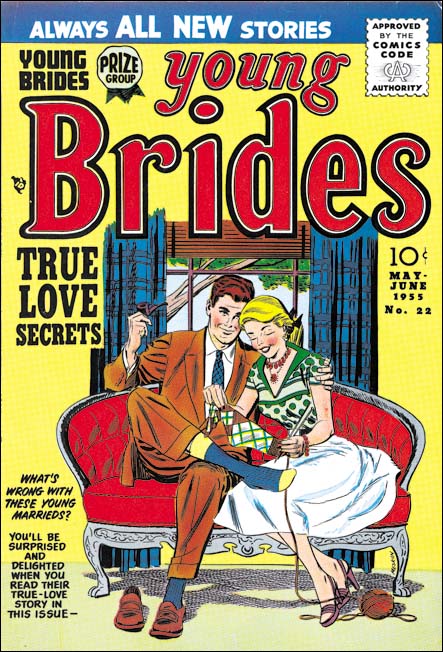
With one exception the covers for the Prize romance titles were done by Draut and Prentice. As seen previously, some of the covers were made from stats of a splash panel (or visa versa). The one exception is the cover of Young Brides #19 (November 1954) which I have tentatively attributed to Joe Simon. This assignment is not based on art style but rather on evidence from Joe Simon’s art collection. I hope that someday I will be able to write about this cover.
In Love #1
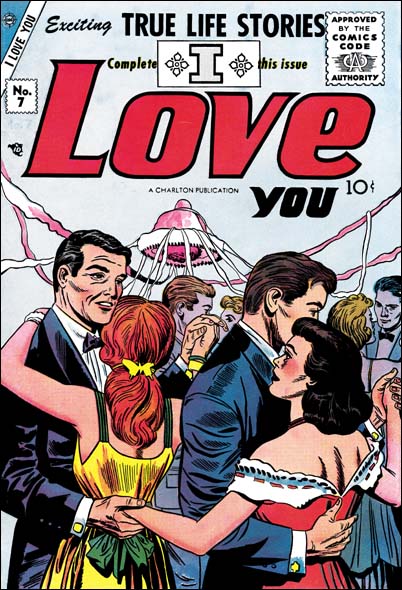
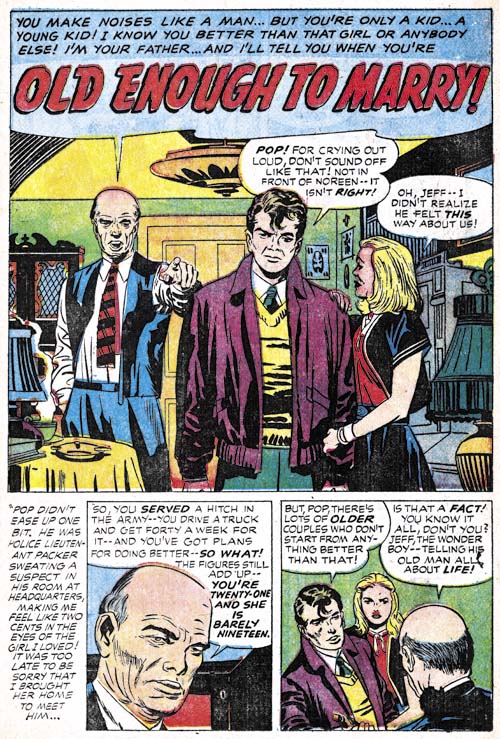
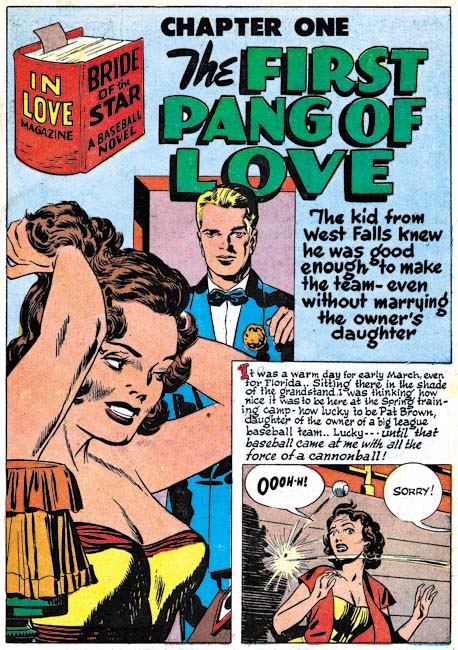
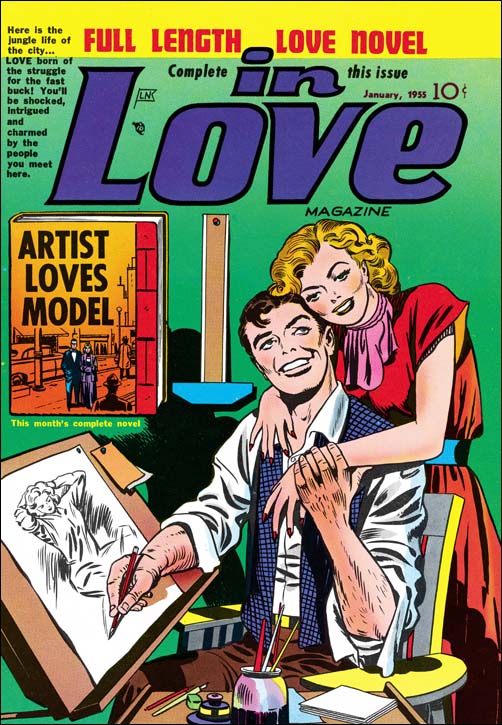
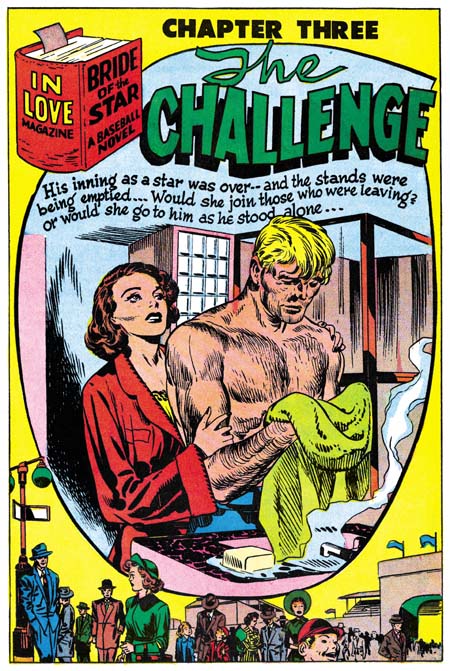
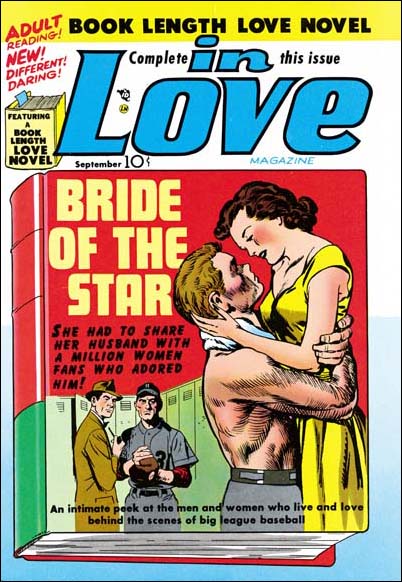
In Love #1 (September 1954) “Bride of the Star” Chapter 1 “The First Pang of Love”, art by Jack Kirby
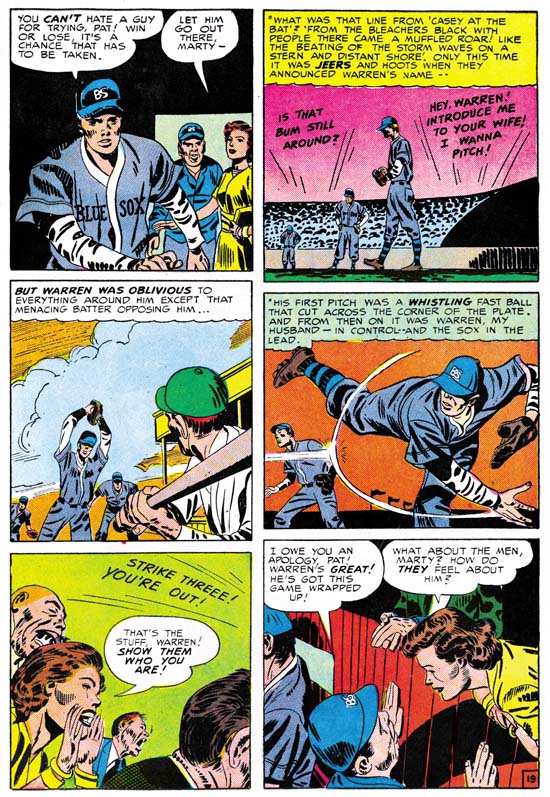
As I promised last chapter, Jack Kirby returns to romance comics after a short absence. However he appears only in Mainline’s In Love and not in any of the Prize romance titles. Kirby’s absence from Prize romances will continue for some time. In Love was an interesting title who’s “hook” was the long story contained in each issue. Kirby did all 20 pages of the art for the “Bride of the Star” from In Love #1. I will not write much about this story here because I covered it in a previous post on In Love #1.

Besides the length of the story, one of the things that distinguish In Love from the Prize romance titles is that Jack returns to full page splashes for all the three chapters. Frankly I already illustrated the best splash in my previous post but I felt I must include one of the other ones here. To be honest it is not one of Kirby’s best pieces but I feel that the splash for the other chapter to be even more inferior. But all of the story art is actually quite good.

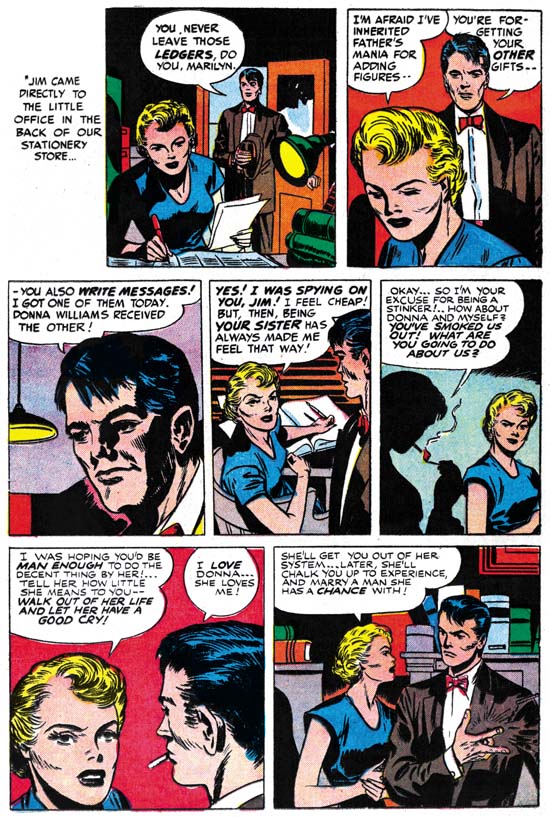
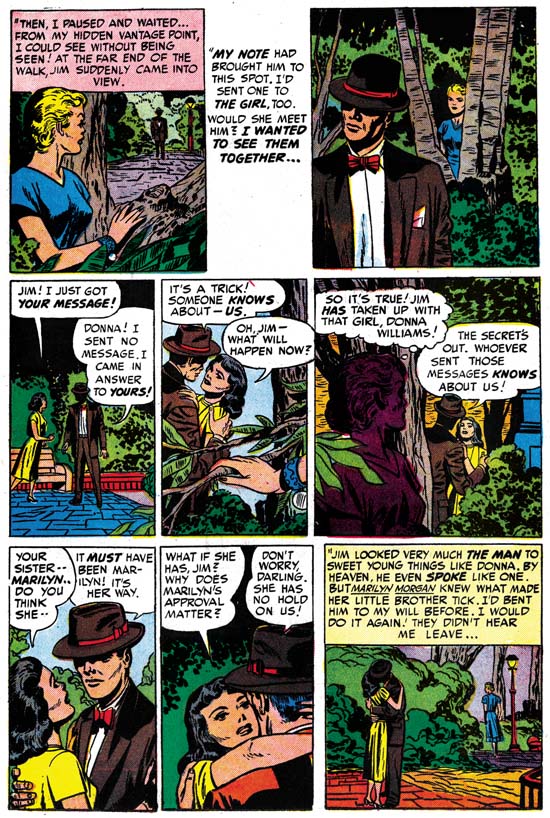
Kirby on contributed a small part to the featured story “Marilyn’s Men” from In Love #2 (November 1954) with most of the work being done by Bill Draut. Since the post whose link I provided covers this story I will forego further comments here.

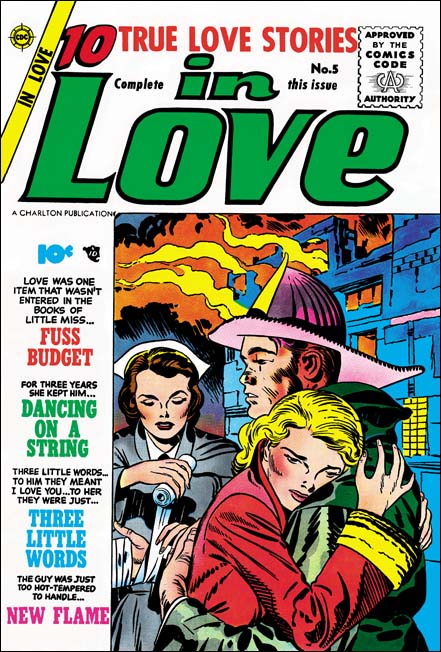
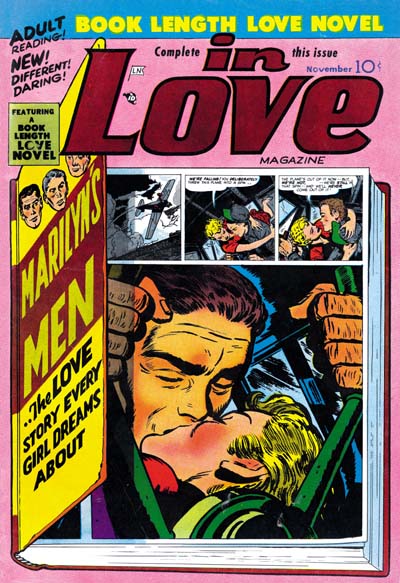
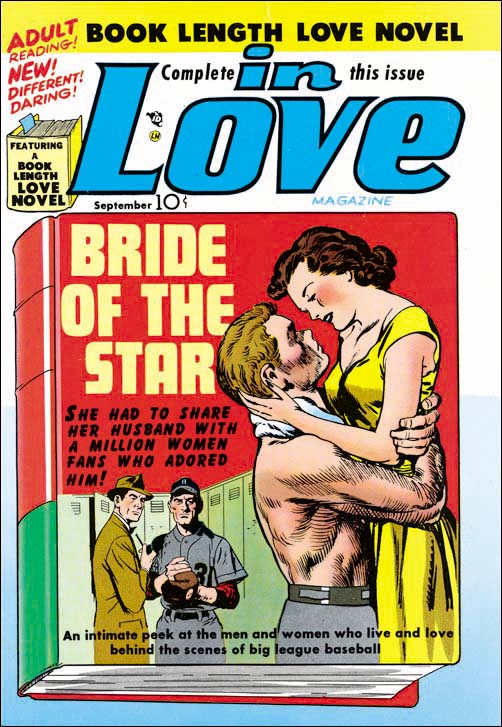
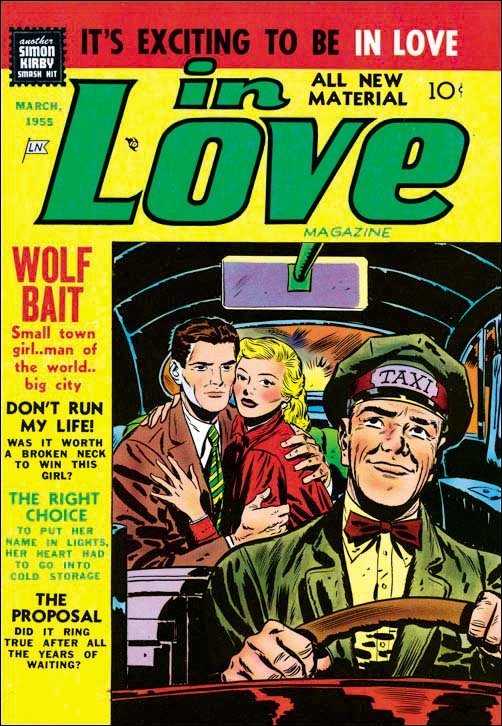
The cover for In Love #1 was one of the rare collaborations between Jack Kirby and an artist other the Joe Simon, in this case John Prentice (Jerry Robinson at the Jack Kirby Tribute Panel). Not only was the cover drawn by different artists but inked by different hands as well. Prentice’s back was clearly inked by himself and I suspect, though I am by no means certain, that Jack inked his own pencils as well.

Young Romance #74
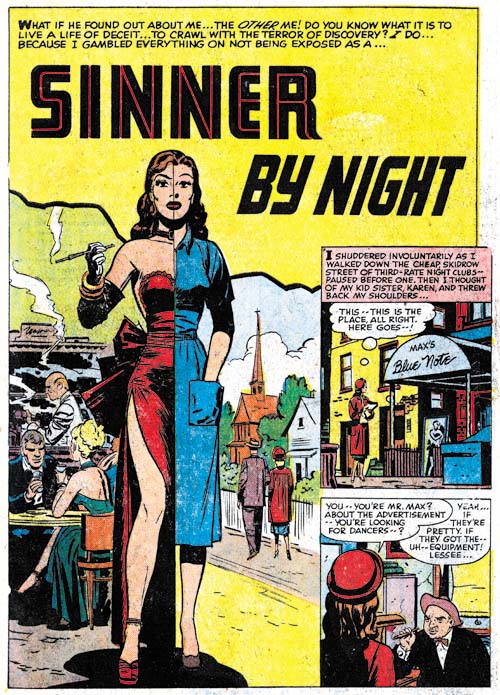
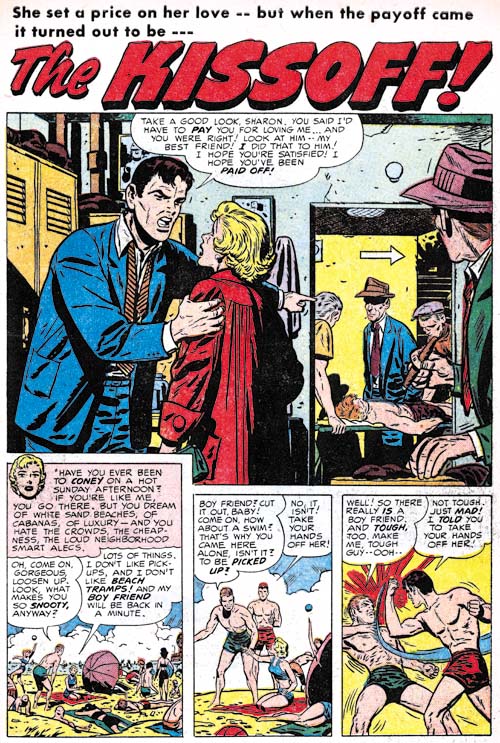
Young Romance #74 (November 1954) “The Kissoff”, art by Bill Draut

Bill Draut was the most prolific artist during this period but not by much. His recent decreased presence in S&K productions is a bit hard to understand. I once surmised that it might be due because of the work he was doing in preparation for the launch of Mainline. But on reflection there just does not seem enough work by Draut in those early issues of the Mainline comics to impact his normal work load. So I now suppose that his recent decreased contribution was due to some personal reason. Draut is one of the more consistent artists to work for Simon and Kirby but his style did not change much over the years. This makes it difficult to have new things to say about him. The same link I provided above for my post on In Love #2 goes into more detail about Draut’s work on “Marilyn’s Men”. I also did a post (Swiping Off of Kirby) about the use Bill made of art from an earlier story by Kirby.

Young Romance #73
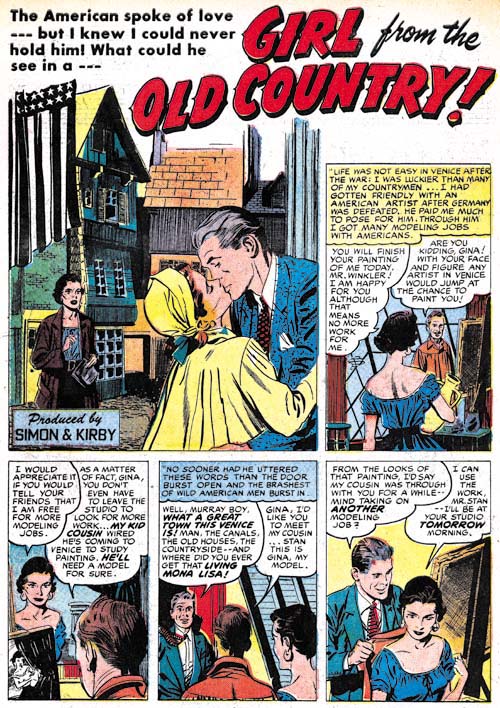
Young Romance #73 (September 1954) “Girl from the Old Country”, art by John Prentice

John Prentice was just behind Draut in productivity. This is one of the examples where a stat of the splash for this story was used to create the cover. Note that while story splashes were no longer being used in the Prize romance titles, Prentice is still providing a smaller than typical splash panel.

Young Love #60
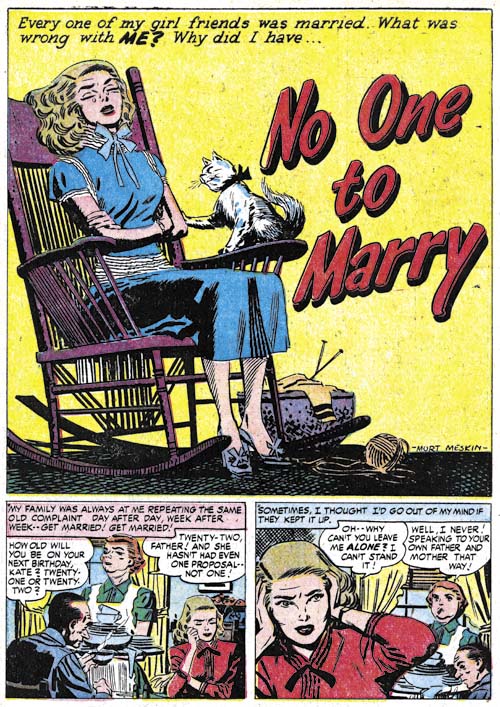
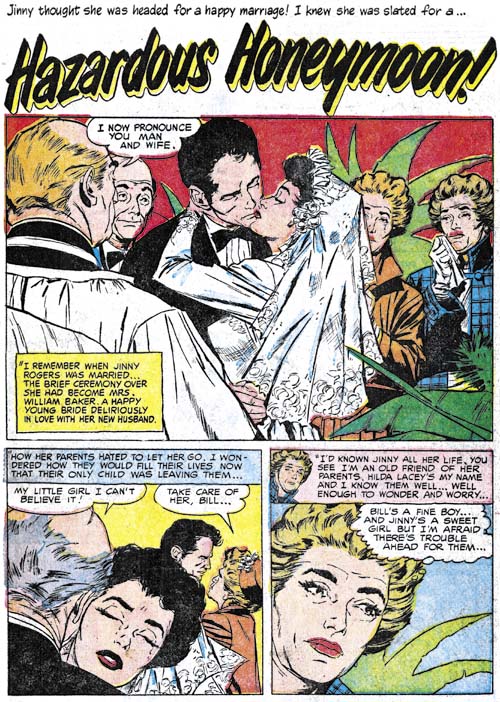
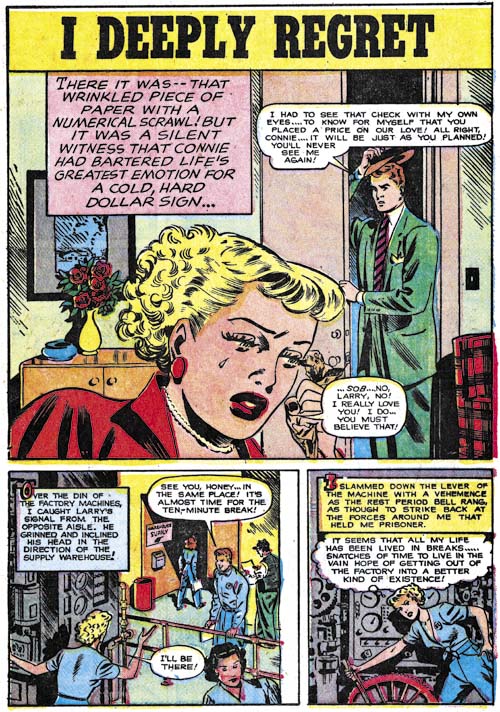
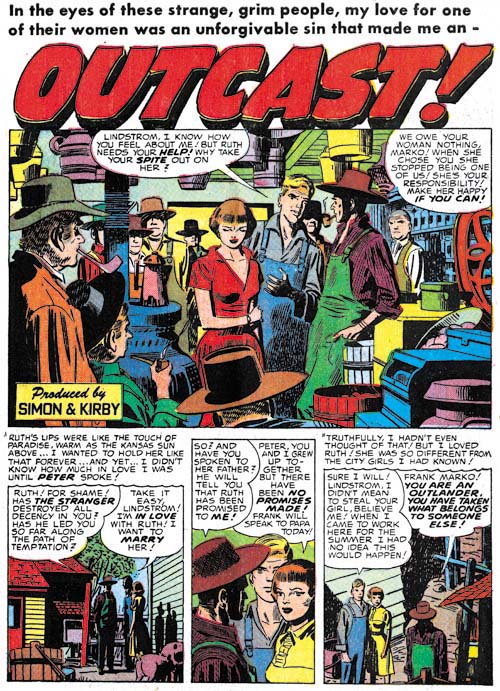
Young Love #60 (August 1954) “Outcast”, art by Mort Meskin

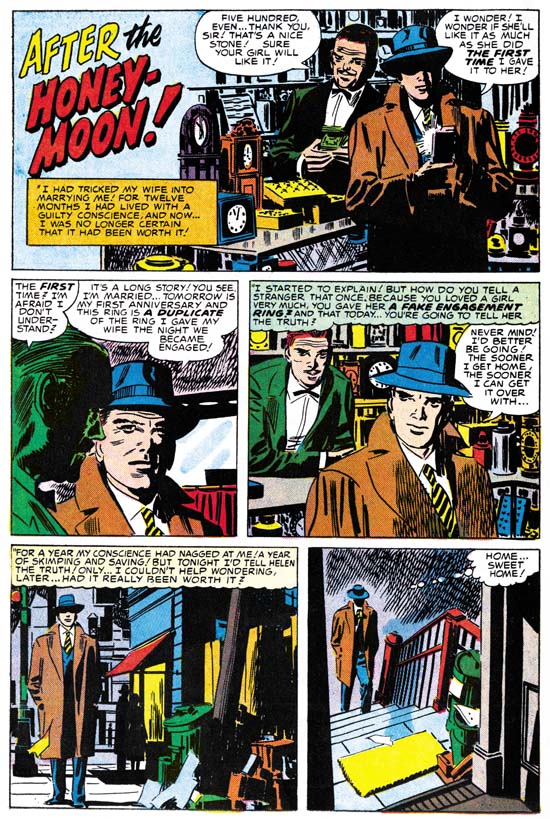
There was an unexpected surge in productivity by Meskin in the last chapter and now there is a just as sudden drop in his output. I must admit that I am a little perplexed about what is going on with Mort. He was working for other publishers and that suggests that he was no longer working in the actual Simon and Kirby studio. But how does one explain the ups and downs since then? I have heard of discussion somewhere on the web where it has been suggested that when Meskin left the S&K studio to work in his own studio that Mort was once again plagued with difficulties in starting work on a blank page. I have no way of saying whether this is true but perhaps it would explain his varied, but often unusually low, output in Simon and Kirby productions. Even if Meskin’s productivity was poor during this period he still did some very nice work. “Outcast” is a good example of a real nice piece by Meskin (I believe he inked it as well). I previously posted on a Mort’s “After the Honey-Moon” from In Love #1 which while very short is one of his masterpieces.

Young Brides #18
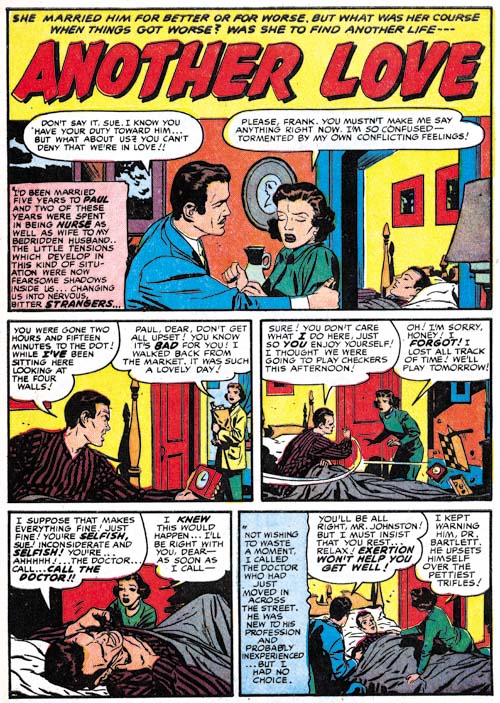
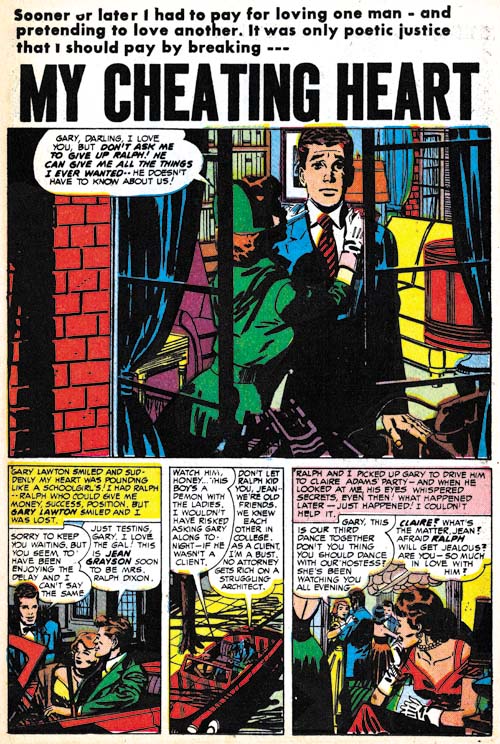
Young Brides #18 (September 1954) “My Cheating Heart”, art by Mort Meskin

“My Cheating Heart” is another great piece by Mort Meskin. I particularly like the inking in this piece. The solid blacks are used very effectively. I am pretty sure this is not Meskin’s own inking or that of George Roussos either but I cannot suggest who the inker was.

Young Romance #74
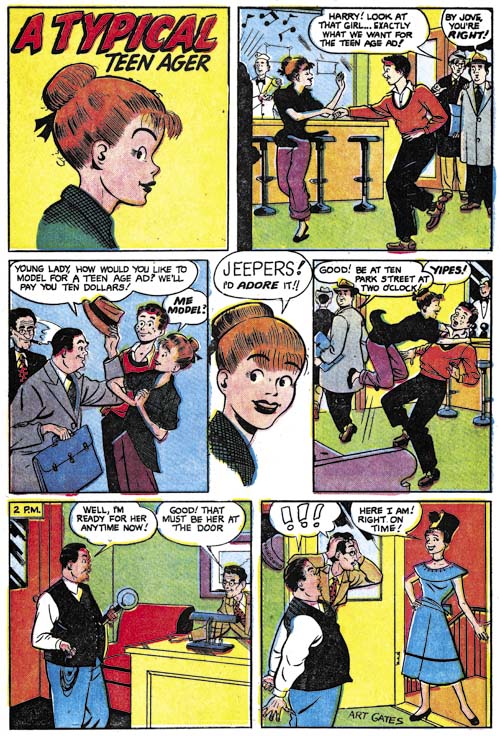
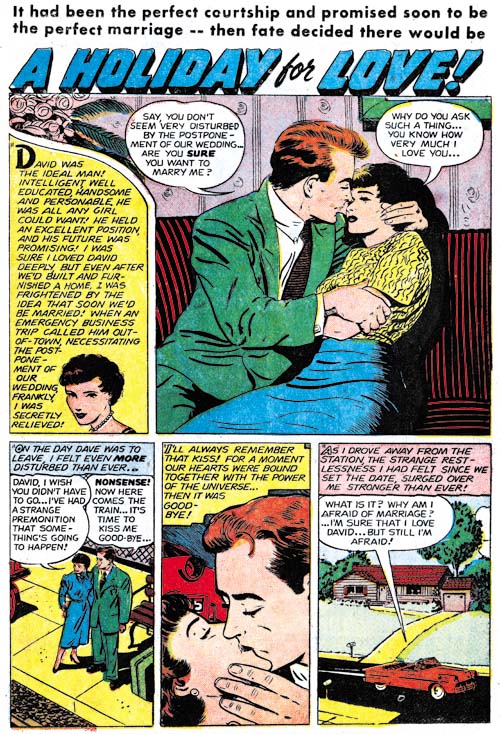
Young Romance #74 (November 1954) “A Holiday for Love”, art by Art Gates

Art Gates continue to supply numerous single page features but he is also did a few 3 page stories. At 6 pages, “A Holiday for Love” is the longest work Gates has yet done for Simon and Kirby. I cannot say that Art is one of my favorite Simon and Kirby artists but I admire the way he can do pieces like this a more cartoon-like gag features as well.

Young Love #61
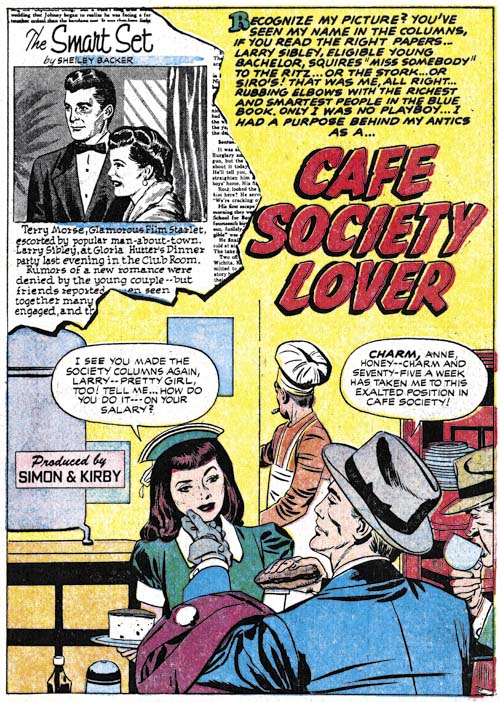
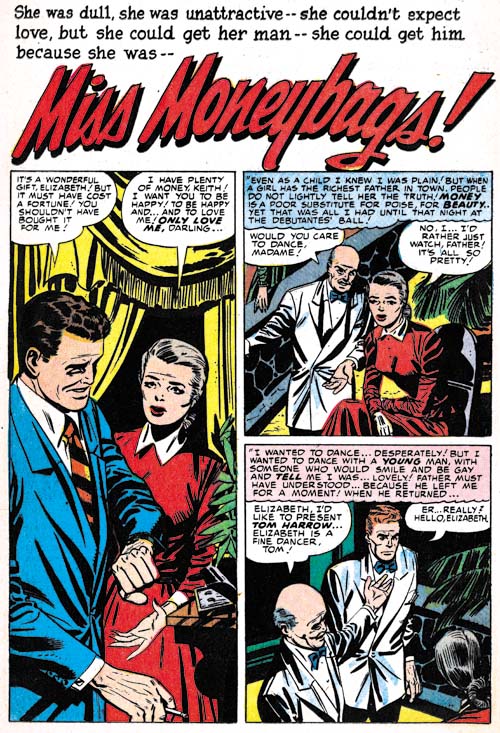
Young Love #61 (September 1954) “Miss Moneybags”, art by Leonard Starr

Leonard Starr was not a new artist for Simon and Kirby productions but a returning one. He played an important part in the Prize romance titles for a little under two years ending in February 1951. His style has not changed that much during his absence and even without a signature “Miss Moneybags” (Young Love #61, September 1954) and “Cinderella’s Sisters” (Young Love #62, November 1954) were clearly done by Starr. However Leonard style had evolved somewhat so it is just as clear that this is not left over material. Although Starr was no longer using page formats that provided a series of tall and narrow panels he still had a predilection for such panels and was using alternative ways to introduce them. While it is possible that the reviews I perform for future chapters of this serial post may uncover one or two other stories by Starr, I am pretty confident that there will not be more than that. Leonard Starr would be like a number of artists from this chapter in that he made a brief appearance and then disappeared from Simon and Kirby productions. In Starr’s case he would be starting his own syndication strip, “Mary Perkins on Stage”, in a year or so.

Young Love #61
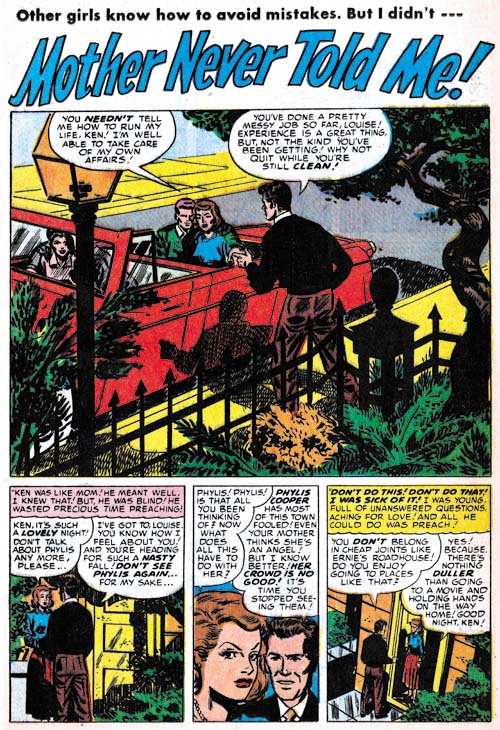
Young Love #61 (September 1954) “Mother Never Told Me”, art by George Roussos?

I am by no means certain, but “Mother Never Told Me” looks like it might have been done by George Roussos. The resemblance is mostly in the men with the woman reminding a little bit like the work of Marvin Stein. But overall I believe the Roussos seems the best fit. George last appeared in a Simon and Kirby production in Black Magic #24 (May 1953). If this attribution is correct, Roussos like Starr will not appear in a future Simon and Kirby productions.

Young Romance #73
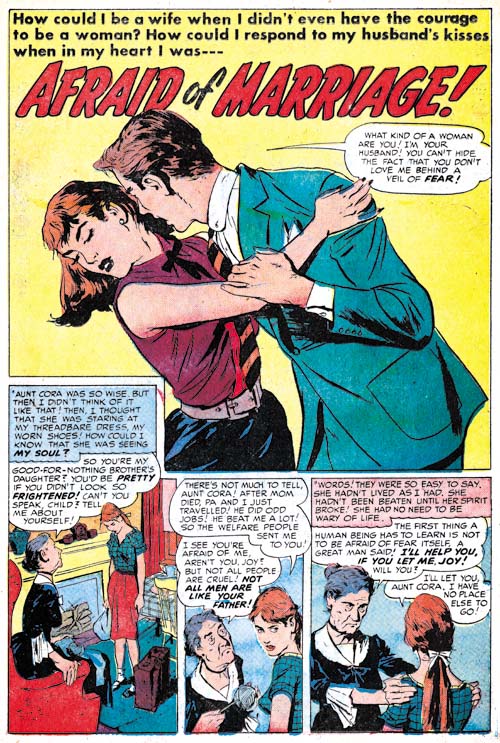
Young Romance #73 (September 1954) “Afraid of Marriage”, art by Jo Albistur

Although unsigned, “Afraid of Marriage” and “Just For Kicks” (Young Love #61, September 1954) are both clearly the work of Joaquin Albistur (he also appeared in Police Trap #1 in this same month). I had previously used Joe as the first name for this artist but it is now clear that he was an artist from Argentine (Joaquin Albistur the Same As Joe Albistur?). Joe Simon does not remember Albistur by name but he does recollect someone from South America doing work for Simon and Kirby. Most people assume Simon was thinking of Bruno Premiani, but I believe it is even more likely that it was Albistur that Joe was recalling.

Unlike most of the new artists in this chapter, Albistur will play an important part in Simon and Kirby productions in the coming year. Jo is not well known among fans and I am not sure how much comic book work he did outside of Simon and Kirby productions. I have seen some original art from “The World Around Us” from 1961 that has been attributed to Albistur. I am not convinced but if it was his work Albistur had adopted a particularly unpleasing dry style. Despite Jo’s short time working for Simon and Kirby he is one of my favorite studio artists. His woman have an earthy beauty that I like, he had an eye for gestures, used interesting compositions and was skillful at graphically telling a story.

Young Love #62
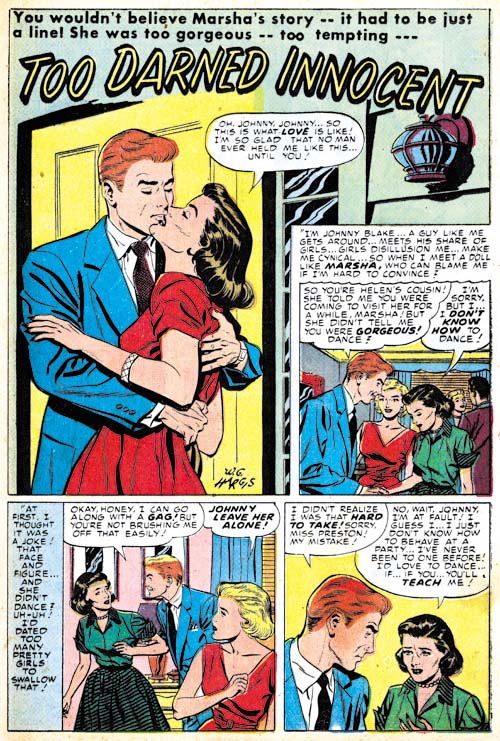
Young Love #62 (November 1954) “Too Darned Innocent”, art by W. G. Hargis

There is one signed piece by W. G. Hargis, “Too Darned Innocent”. However given the number of unidentified artists appearing in Simon and Kirby productions there is the distinct possibility that other unsigned worked may have been done by Hargis during this period as well. In fact I have heard of suggestions that Hargis may have been responsible for a story in Police Trap.

In Love #2
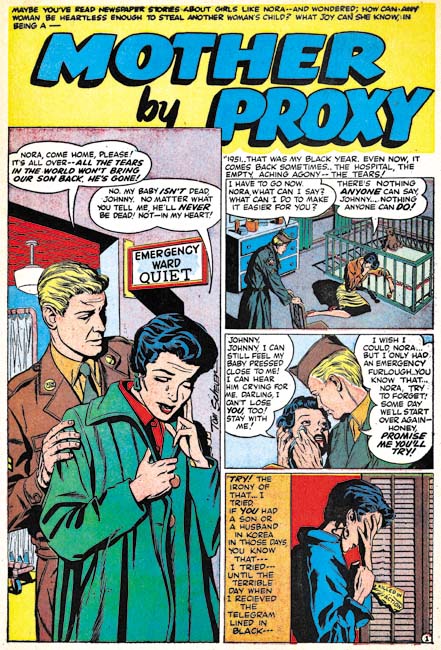
In Love #2 (November 1954) “Mother by Proxy”, art by Tom Scheuer

Tom Scheuer is another artist that only did one signed work for Simon and Kirby. Scheuer (who much later changed his name to Sawyer) is perhaps better known for his advertisement comic work (see For Boys Only from Those Fabulous Fifties and Comic Strip Ad Artist Tom Scheuer from Today’s Inspirations; both great blogs).

Joe Simon’s collection includes the original art for a page from this story. On the back is the name Art Sehrby, a telephone number and a street address. This raises the possibility that Simon and Kirby obtained Scheuer’s piece, and perhaps those of some other artists, from an agent.

Young Brides #19
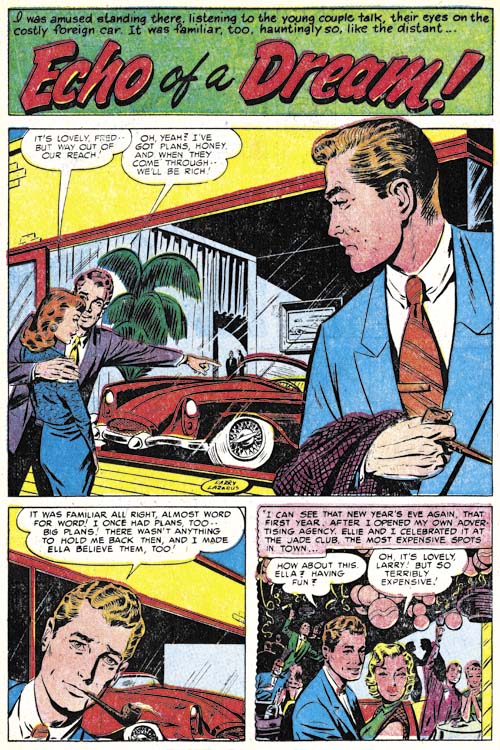
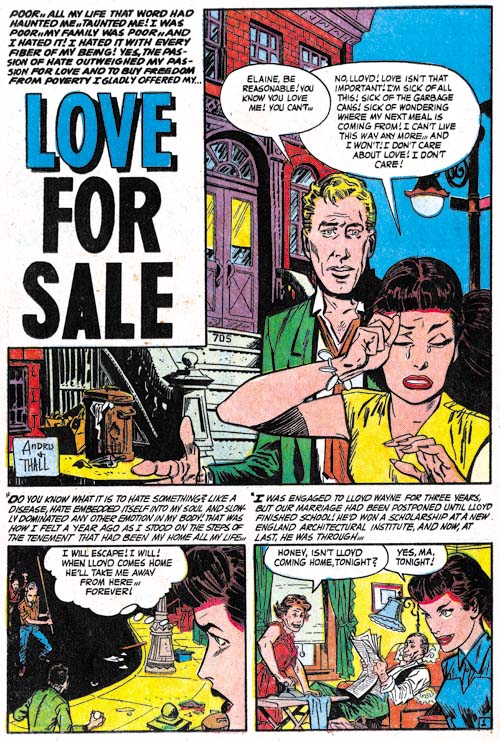
Young Brides #19 (November 1954) “Love for Sale”, pencils by Ross Andru, inks by Martin Thall

There is a story behind “Love for Sale” that has been discussed on the Kirby list but I do not believe I have written about in my blog. Mike Esposito and Ross Andru launched their own publishing company Mikeross with their earliest comic having a cover date of December 1953 (3-D Love). This then was well in advance of Simon and Kirby’s Mainline Comics whose first issue (Bullseye) came out in August.

Mikeross only published four titles (3-D Love, 3-D Romance, Get Lost and Heart and Soul. The 3-D romance titles were single issues and I suspect that their timing was a little off. The initial 3D comics sold very well but were apparently a novelty item. My understanding is that Simon and Kirby’s Captain 3-D which came out in December 1953 was already a bit late and sales were not that great. Since the Mikeross 3D romance titles have cover dates of December and January, I suspect they suffered from lower sales as well. Get Lost went to issue #3 while Heart and Soul only lasted to issue #2. Usually when a title is cancelled after just 2 or 3 issues it is a sign that something other than poor sales was involved. I suspect that the returns from their first comic, 3-D Love were so poor that the distributor pulled the plug on the whole deal.

I do not have the biography of Mike Esposito that came out a few years ago but I did have the chance to flip through it to see what he had to say about what happened next. If I remember correctly Esposito claimed that the distributor forced them to hand over their unpublished artwork to Simon and Kirby. Frankly this is a pretty suspicious claim because a distributor does not have any legal claim to the artwork. Further in my discussions with Joe Simon he has vigorously denied that it happened. Martin Thall gave an interview published in Alter Ego #52 where he stated that in order to recover some money they sold some art to Simon and Kirby and that Kirby was the one who arranged and received it. This makes a lot more sense and is the version that I accept.

The last issue of Heart and Soul was cover dated June so the next one would be expected for August. “Love for Sale” was used in Young Brides #19 (November). The timing is so perfect that there is little doubt that this story was among the art sold to Simon and Kirby. What makes that even more convincing is that the lettering was not done by Ben Oda like almost all of Simon and Kirby’s productions.

This is not Ross Andru’s first appearance in Simon and Kirby productions as a story by him appeared in May 1952 (Chapter 16) and two in May and June of 1953 (Chapter 19). Another Andru story will be seen in the next chapter which also was probably bought from the defunct Mikeross publishing company.

Young Brides #19
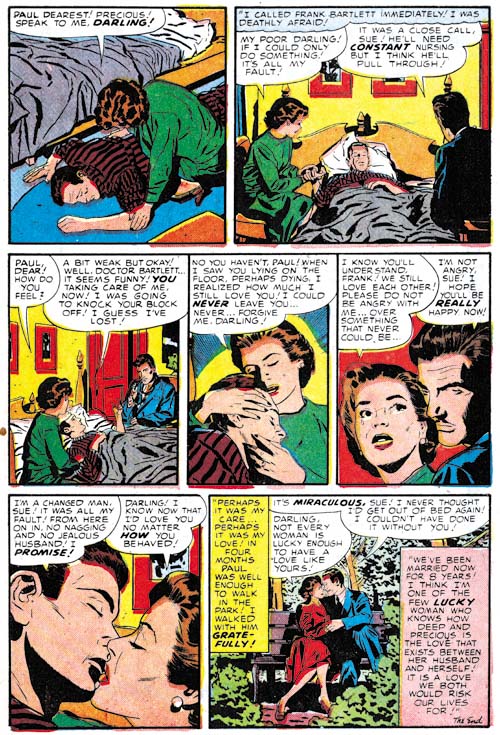
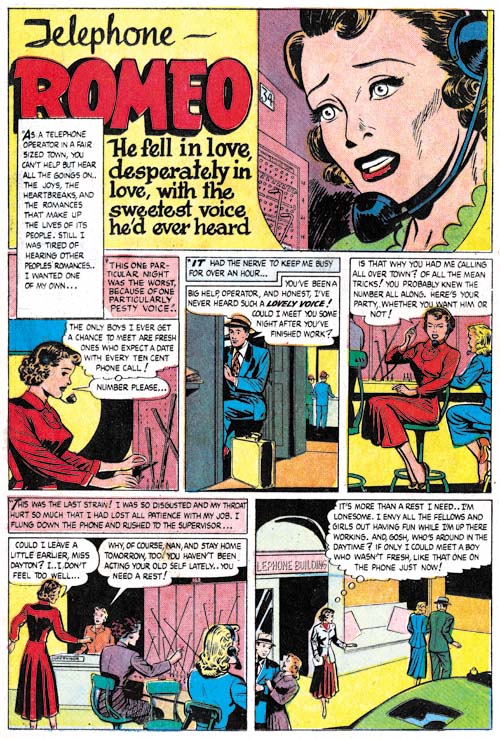
Young Brides #19 (November 1954) “Telephone Romeo”, art by unidentified artist

Since one story from Mikeross has been identified the question becomes can any others be found? Such art need not have been used right away but it is interesting that Young Brides #19 contains another story, “Telephone Romeo” that was not lettered by Ben Oda. However the letterer is not the same one that did “Love for Sale”. I have only examined the 3-D Love, 3-D Romance and Heart and Soul #1 but none of them used this artist. Actually I find Andru’s hand through most of them and I suspect Ross and Mike did all the art themselves. So it cannot be said with any certainty that “Telephone Romeo” was another piece sold by Mikeross but it can be confidently said that is was bought from some distressed publisher or artist stuck with unused art.

Young Love #62
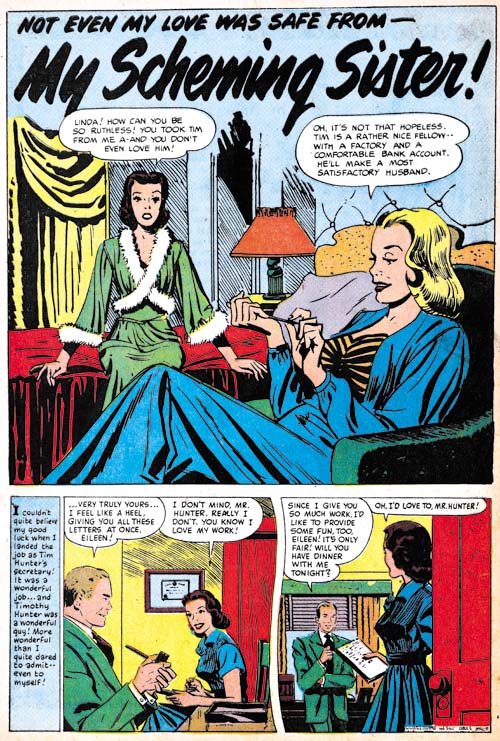
Young Love #62 (November 1954) “My Scheming Sister”, art by unidentified artist

There is yet another piece, “My Scheming Sister”, with lettering clearly not done by Ben Oda. Look at the caption to the first story panel, Simon and Kirby productions did not typically use lower case letters in their captions. Once again this was a piece bought by Simon and Kirby but not necessarily from Mikeross. Whoever the artist was he was one of the better of the unknowns from this period. A smooth confident line and great characterization.

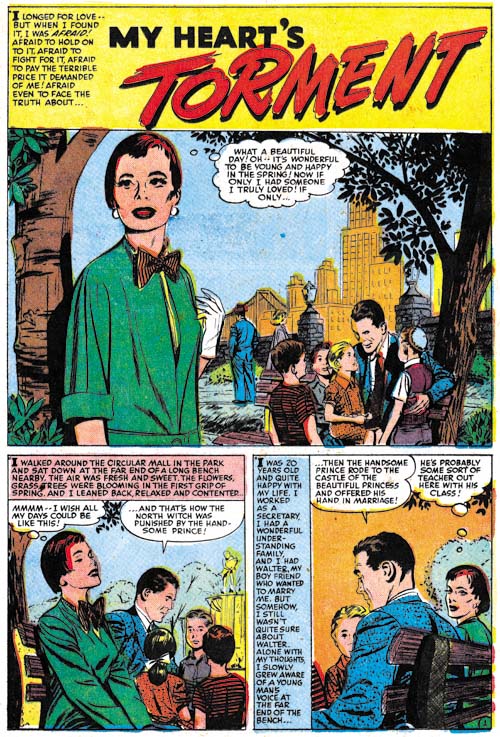
Young Romance #72
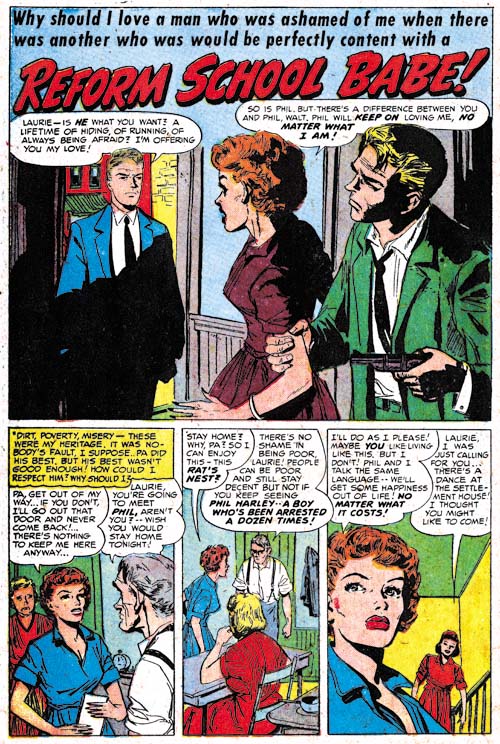
Young Romance #72 (August 1954) “Reform School Babe”, art by unidentified artist

Not all the unidentified artists were new; the one that did “Reform School Babe” had been an important contributor to Simon and Kirby productions for some months. I believe one of my commenters suggested Vince Colletta, at least for the inking, but I am not sufficiently knowledgeable about that artist/inker to hazard a guess.

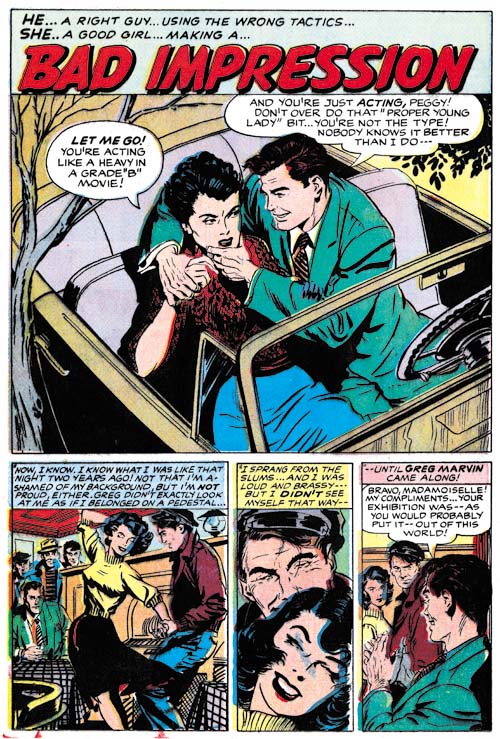
Young Romance #74
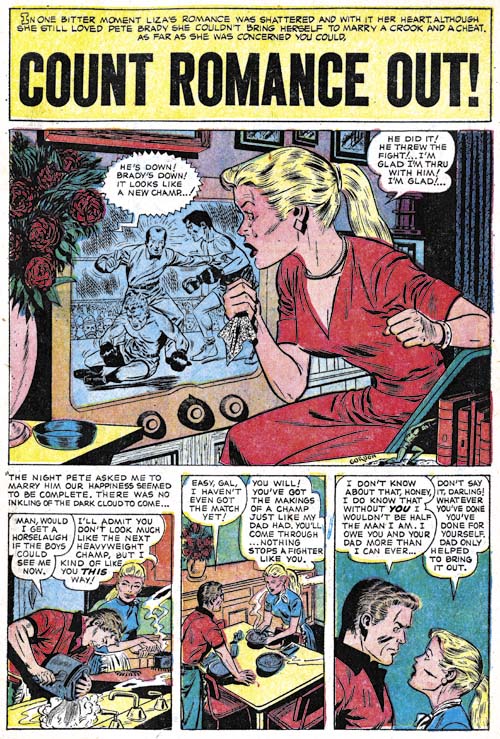
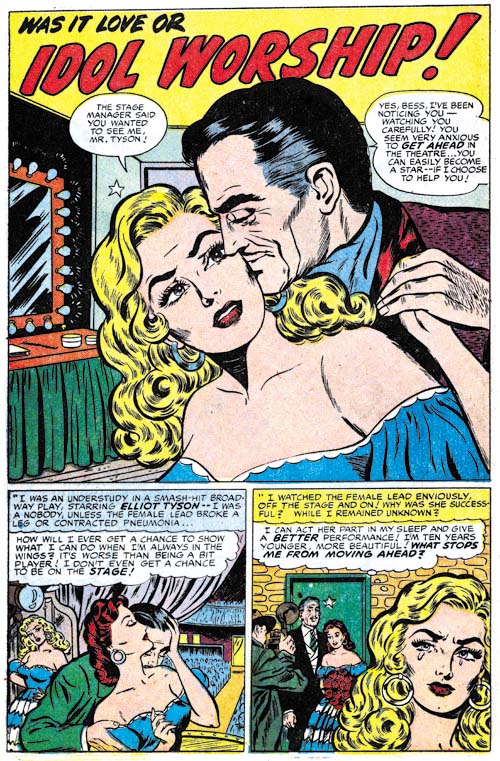
Young Romance #74 (November 1954) “Idol Worship”, art by unidentified artist

I will not be supplying examples of all the unidentified artists from these romance titles as I have not sorted them all out and anyway some are not that great. But I did want to provide an image from “Idol Worship” by one of the better artists working at this time for Simon and Kirby.

In summary, Simon and Kirby were using a number of new artists. Some like Jo Albistur would play important contribution to S&K productions; others like Tom Scheuer would make a brief appearance and not be seen again. Some may have been hired from the street but there is also the suggestion that some work may have come from an art agent. Further there is good evidence that some of the work came from the failed Mikeross publishing and perhaps other publishers as well. I have not yet done a review of Ben Oda’s lettering like I have those by Joe Simon, Jack Kirby and Howard Ferguson. I suspect a careful comparison of Ben Oda’s lettering with that used in the stories from this period will reveal others that came from romance titles that were failed. Simon and Kirby’s use of such material is not surprising because they had previously obtained art from Harvey after the love glut (Chapter 13, Romance Bottoms Out).

The Art of Romance, Chapter 27, The Return of Mort

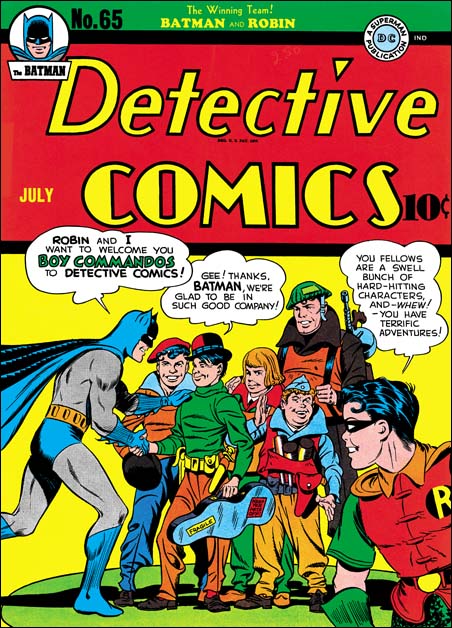
Detective Comics #65
Detective #65 (July 1942), art by Jack Kirby and Jerry Robinson

I mentioned in a previous post a review of the Jack Kirby Tribute Panel that Comic Book Resources has posted (written by Jim MacQuarrie).

At the very end of the article is found:

Jerry Robinson closed the panel by recalling his participation in one of the very few collaborations that Kirby did with anyone but Joe Simon. “The only time Jack collaborated with anyone but Simon on a cover was an issue of ‘Detective Comics’ when the Boy Commandos joined the book. The cover showed Batman and the Boy Commandos shaking hands. I drew Batman and Jack drew the Commandos.”

In Love #1
In Love #1 (September 1954), art by Jack Kirby and John Prentice

While of course Jerry is right about his contributions to the cover of Detective #65, he is not correct about being the only artist, other then Joe Simon, to collaborate on a cover with Jack Kirby. John Prentice, one of the usual suspects of the Simon and Kirby studio, also had that honor. Jack did the foreground couple while John did the two background figures.

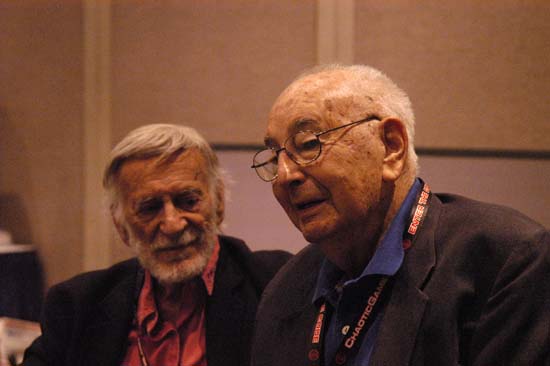
Jerry Robinson and Joe Simon
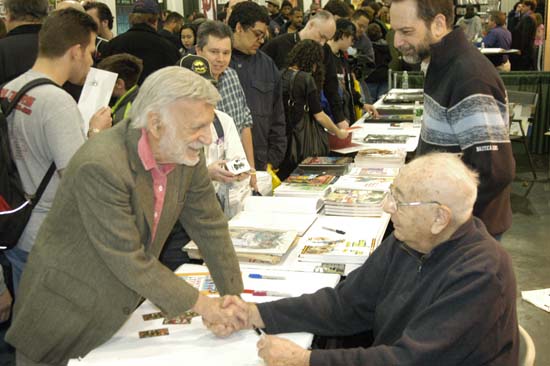
Jerry greeting Joe Simon at the Big Apple Con of 2006

Jerry Robinson and Joe Simon
Jerry and Joe at New York ComicCon 2008

Young Romance #8
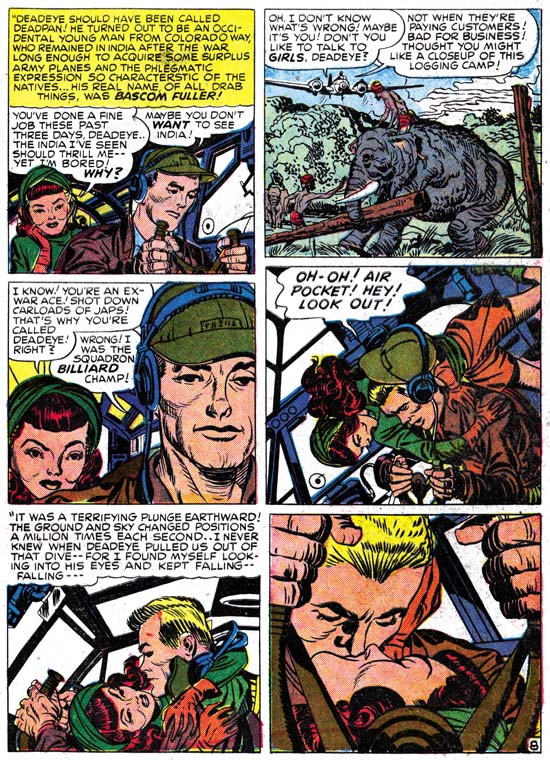
Young Romance #8 (November 1948) “Love Can Strike So Suddenly”, art by Jack Kirby

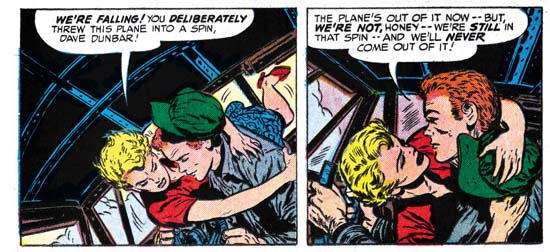
Jack Kirby’s take on romance always seemed to have more of an emphasis on action then most other comic book artists. The above sequence from an early Young Romance is a great example of this. The dramatic plunge of the airplane after hitting an air pocket literally lands a seemingly indifferent lady onto the lap of a reluctant man. The analogy of the airplane’s occupants fall and their falling in love is presented by both the images and accompanying text. It took chance to supply the action needed to overcome the barriers each had placed before their true feelings. This sequence may have played a small part in the overall story but it was pivotal. It was also the quintessence of Kirby’s vision of romance.

In Love #2
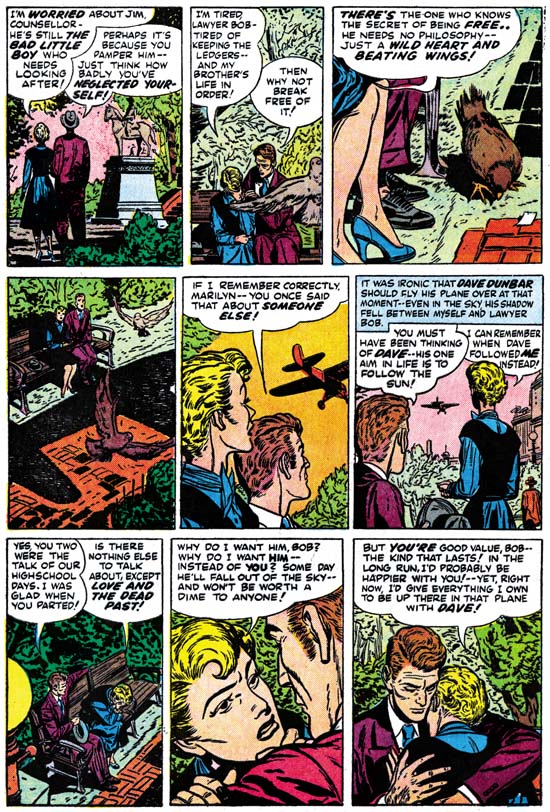
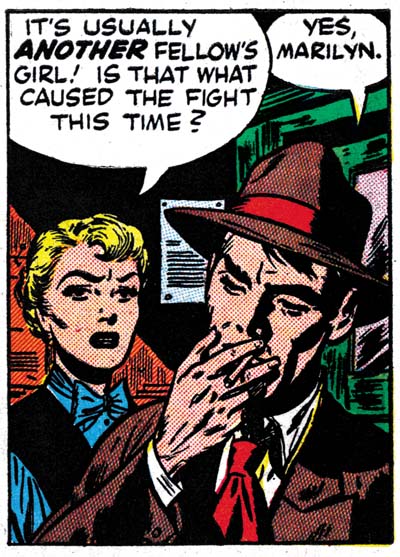
In Love #2 (October 1954) “Marilyn’s Men” page 14 panels 5 and 6, art by Bill Draut

In Love #2
In Love #2 (October 1954) “Marilyn’s Men” page 15 panel 1, art by Bill Draut

Kirby’s predilection for action in romance stories stayed with him. Although most of the story “Marilyn’s Men” from In Love #2 was drawn by Bill Draut, I believe that much of the plotting and at least some of the scripting came from Jack. Therefore I feel that the occurrence of essentially the same three panels from Young Romance #8 was not Draut trying to pull something over on his bosses, instead Bill was just following Simon and Kirby’s direction. The premise was similar between the two stories, both involved a plane flight where the relationship between the man and woman changes during the trip. There are significant differences between the two stories as well. In YR it is an accident that breaks down the resistance of both parties, whereas with In Love the pilot’s maneuver is purposeful, showing that it was only Marilyn’s reluctance to love that had to be overcome.

Draut’s swipe is not a close copy of Kirby’s art. Most of the deviation in the art can be attributed to differences in the two stories. Unlike most of the female characters in S&K romances, Marilyn had relatively short hair. Undoubtedly this was visual shorthand for her success as a businesswoman. Unfortunately Marilyn’s shorter hair could not provide the same affect to the first panel where she first is lifted out of her seat. Draut does what he can but Kirby’s heroine had more hair to add drama with. In Kirby’s story the heroine is seated behind the pilot while Marilyn is on his side. Jack therefore can show more of the lady as she goes from her seat to the pilot’s lap. Draut must provide a more foreshortened view and even rotated the pilot in relation to the cabin so that in the end the visual logic of the first scene breaks down. In the second panel Draut has everything under control. In fact here Draut improves on Kirby’s composition by having Marilyn ending up gazing into the pilot’s face, while Kirby left her looking to the side. There is one logical peculiarity in Draut’s presentation. In the first panel Marilyn’s left arm is already on the pilot’s shoulder while his hat is just beginning to come off his head. Yet in the second panel Marilyn’s left hand holds the hat down. How did that transition happen? Jack provides the answer by using the pilot’s headset to constrain the hat’s travel. The final panel, the dramatic view of the kiss, is very similar between the two versions, but by no means identical. The pilot’s face is typical Draut and not a close copy of Kirby’s version. Bill has also added some shadows of the window frames to add even more drama to the scene. While Kirby has good control over the unusual perspective, in Draut’s rendition where is Marilyn’s nose? It does not seem possible to trace its position without violating the man’s facial structure.

In Love #2
In Love #2 (October 1954) art by Bill Draut

Jack was a master at visual storytelling so it comes as no surprise that the dramatic kiss occupies the last panel of his page. In “Marilyn’s Men” the kiss has been placed on the first panel of the page following the other two scenes. This greatly diminishes the impact of the story line. This may not have been Draut’s fault, the layout of the page suggests that the kiss panel was placed there afterwards. Perhaps editing was required to reduce the page count. That it was known then what the proper layout for this sequence was is shown in the cover where not only is the kiss the last panel, but it has also been enlarged.

The three panel sequence from Young Romance #8 hardly stands out as the most memorable panels from Kirby’s early romance work. Even so someone remembered and then used them as a reference for a comic done almost six years later.

I recently posted on the “Artist Loves Model” story from In Love #3 (December 1954). I appended a note to my blog entry where I admitted forgetting about a post by Bob on the Jack Kirby Weblog about the syndicated strip version of the story. Recently I received a copy of Buried Treasures v1 #2 which includes strips of this syndicate strip proposal. I have compared, panel by panel, the strips to the comic book story. I wrote out all the difference as an aid to my understanding what was done. Just in case anyone wants a blow by blow description I have posted the details. Here I will summarize what was done to convert the syndication strips into the comic book story.

The strips opens with Mayor La Flower. We will never see again, he is just one of Cobb’s fans reading his “Old Man Spry” to his juvenile radio audience. This beginning leaves little doubt that there were no earlier strips. The strips end abruptly with Inky going off to confront Donna Dreame about her illicit dealings. Only the comic book version of the story provides the confrontation. But the book story includes a romance angle between Donna and Inky that was not a part of the syndication strips. Had it been drawn, the confrontation scene for the syndication strips would have been very different. Personally I doubt that Simon and Kirby produced any more strips, as a syndication proposal it would have been better for the story to be open ended.

The most significant difference between the strip and the comic book versions is the number of art panels that never made it into the comic book story. 43 out of 142 strip panels failed this transition. The first panel from the strip that made it into the comic book was the first one on the sixth strip. This means that 20 earlier panels were discarded. Before the first story page of the comic book was completed a further 4 syndicate panels would be dropped. Thus most of the ignored strip panels come from the start of the story. The remaining unused strip panels do not seem randomly distributed among the comic book pages. One group is associated with the first and second meeting between Inky and Donna Dreame (8 skipped panels for pages 8 to 10). The next story arc with a number of unused panels concerns Donna Dreame’s hatching her scheme with Half-tone (page 12 with 5 unused panels). The next dropped set of panels combines Half-tone arriving at Donna’s place with his first meeting with Inky (page 13 with 4 unused panels). More importantly the section dropped off concerns Half-tone and Donna coming back from a night on the town. Considering the love angle between Inky and Donna that was part of the comic book story this strip was particularly inappropriate. There are a few single skipped strip panels in other parts of the comic book story.

Why so many unused strip panels? At 18 pages “Artist Loves Model” is the shortest of the In Love “novel length” feature stories. “Bride of the Star” had 20 pages and “Marilyn’s Men” had 19. It is possible that the length of these stories was dictated by the number of pages that the backup stories would require and not the other way around. However it seems more likely that strip panels were not used simply because they were not necessary. Even without the extra panels, the comic book version of the story reads just as well as the syndication strips. The only negative effect of the dropping of strip panels is the lengthy caption found on the splash page of the comic book. Even Joe Simon criticized it when he recently viewed the splash page. However the wordy caption probably was considered preferable to the 20 art panels it replaces. That would have added over 2 pages without significantly helping the story.

It does seem that the initial intent was to include more of the early syndicate strips in the comic book story. In my earlier post I mentioned an used page of art in Joe Simon’s collection. This page was made from some of the panels from the third strip. I was incorrect with my original suggestion that this art page was discarded because it was taking the story into a different direction. I erred due to my misidentifying one of the characters as Jack Hill (because I was working from memory). Now it seems to me that this page was abandoned in order to condensed the story’s beginning even further.

In Love #3
In Love #3 (December 1954) “Artist Loves Model” page 14, pencils by Jack Kirby inks by Joe Simon

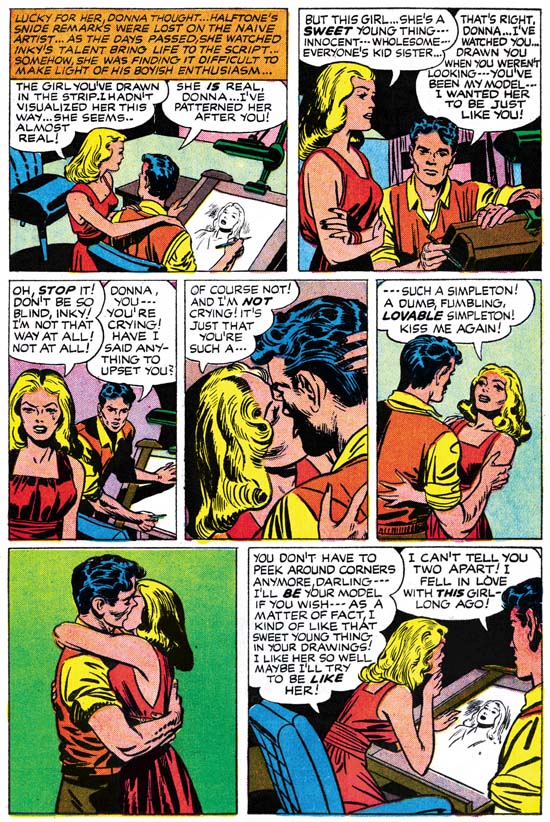
Art that did not seem to exist in the syndication strips was added to the comic book. The new art is found in two sections. One is the story arc where Donna Dreame finds out that Inky has used her as a model for one of the characters in the strip they are collaborating on (page 14). A more substantial addition occurs at the very end of the story starting from when Inky confronts Donna Dreame about her dishonest dealings (page 16 through 18). What is significant about these additions is that they concern the romance between Inky and Donna. This romance played no part of the original syndication strip and was added to convert the story for inclusion in a romance comic book title.

In Love #3
Syndication strip 13 panel 4, art by Jack Kirby from Buried Treasures v1 n2
In Love #3 (December 1954) “Artist Loves Model” page 5 panel 5, art by Jack Kirby

In Love #3
Syndication strip 11 panel 4, art by Jack Kirby from Buried Treasures v1 n2
In Love #3 (December 1954) “Artist Loves Model” page 4 panel 6, art by Jack Kirby

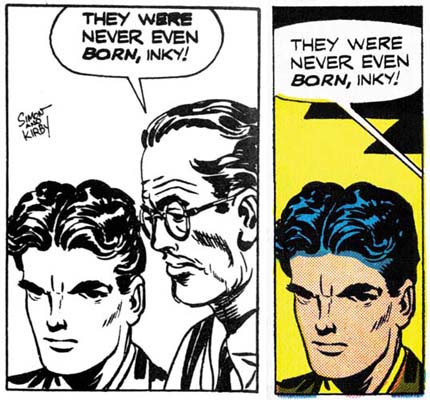
Not all the syndicate panels that did make it into the comic book did so unmodified. The overwhelming majority of strip panels were square. When inserting strip panels into the story 41 of them had their shape altered. 30 panels where horizontally truncated, 10 horizontally extended, and 3 vertically truncated. One of the horizontally expanded panels was used to make a splash panel. This splash was overlaid with another panel so that its shape was no longer rectangular. The new art that was added to expanded panels was kept pretty simple and consisted mostly of backgrounds. Much of the horizontal truncations were done simply by clipping the art. In 2 panels this resulted in the complete elimination of one of two original figures. In 7 occasions where the panel was narrowed horizontally, a character was shifted so as not to be significantly truncated. This explains the unusual cut up nature that I found on Joe’s unused art page. Cutting a strip panel into pieces allowed adjustments to the final shape of the panel for the comic book. It appears that this was done even in cases where in the end the square panel was retained.

In Love #3
Syndication strip 22 panel 2, art by Jack Kirby from Buried Treasures v1 n2
In Love #3 (December 1954) “Artist Loves Model” page 9 panel 3, art by Jack Kirby and Joe Simon

I was not completely accurate above about all the syndicate strip panels that made it into the comic book. Actually I found 14 panels where the art was redrawn either wholly or in part. None of these alterations changed who was portrayed or significantly modified the pose. Most of the time Donna Dreame was redrawn (12 panels), Inky was the only other character to be modified (4 panels). In the syndicate story Inky was portrayed as shorter then most of the other characters. With his short stature and pugnacious nature, I cannot help but feel that Jack Kirby made Inky into a sort of alter ego. The size difference between Inky and Donna may have been fine for the syndicate strips. But this created a problem when romance between the two was added for the comic book, it just would not do to have love between a tall woman and a short man. So in 4 panels Inky was redrawn to be taller. That the romance angle was the reason for this adjustment is shown by the fact that Inky is still shown as shorter then Jack Hill.

In Love #3
Syndication strip 22 panel 3, art by Jack Kirby from Buried Treasures v1 n2
In Love #3 (December 1954) “Artist Loves Model” page 9 panel 4, art by Joe Simon

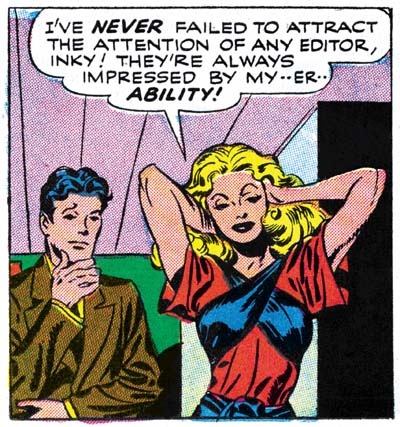
Donna Dreame was altered in a couple of panels as part of the change to reduce her height relative to Inky. That does not explain most of the times that Donna was redrawn. I believe it that these other alterations were done to make Donna more conventionally attractive. Joe Simon once remarked to me that Kirby’s women were not very beautiful, but who cared since Jack drew such great stories. That is a view shared by many others, including Kirby fans. Some have even described Kirby’s woman as ugly. (I hasten to add that I do not share these views and someday I will write a post on why that is.) Joe Simon redrew many of Jack’s women when DC republished some of the old Black Magic stories. Thankfully not all of Jack’s drawings of Donna were redone. This is particular fortunate in the case of a panel which is one of the most sensuous images Kirby ever drew (see image below). Sometimes only Donna’s hair was redone, in these cases the hair was simplified. Kirby used “wild hair” as an indication of a “wild woman”, the hair changes seemed to be done to “tame” Donna a bit.

In Love #3
In Love #3 (December 1954) “Artist Loves Model” page 10 panel 3, art by Jack Kirby

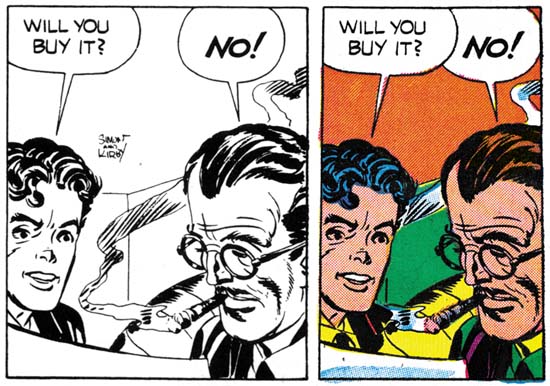
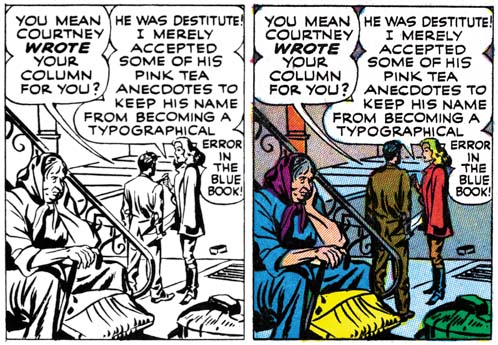
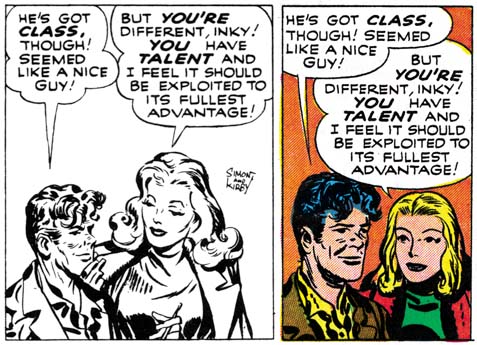
All Simon and Kirby signatures were removed. Other art differences between the syndication strips and the comic book are rarer. Four panels have additions to the background. In two further cases a black band with featuring was added to the top of the panel. All occurrences of Donna’s use of a cigarette holder were removed. Most surprising is a name change, Inky Spotts of the syndication strips became Inky Wells for the comic book. Both names are the sort of appropriate naming that Simon and Kirby often used. It is hard to understand why in the end Wells was considered so much better as to warrant the re-lettering needed to alter the story.

Script changes were not at all extensive. I have noted only two word balloon whose text was modified. One caption from the syndicate strips was deleted and another one rewritten. A caption was added to one comic book panel and most significantly 6 caption panels were added to the book version. None of these affected the plot. All caption additions or alterations seem to have been done just to improve the reading.

Since I have explained the what and the why of the changes made to transform the syndication strips into the comic book story, the question remaining is who was responsible? The syndicate strips had all been drawn by Jack Kirby and much, if not all, of the inking looks like his as well. As for the original syndication scripting, although other writers may have contributed, some of it seems written by Jack. The pencils for the new splash page for the comic book was by Kirby but I believe it was inked by Joe Simon. The same very coarse picket fence inking also shows up in the second splash (page 10) where extending the original syndicate panel resulted in the addition of some art. The art added to the other expanded panels also appears to be inked by Joe. The redrawing of Donna and Inky for the comic also looks like it was done by Joe. Some of the writing for the new or altered captions read like Simon’s effort. However some of the other writing is more “flowery” then typical for Joe, so either he was purposely pushing himself in that direction, or another writer was also involved in the re-scripting. The new art was clearly penciled by Jack but looks different from the rest of the story because Joe did the inking. All in all it would appear that Simon was responsible for editing the syndication strips into the final comic book form with Jack providing newly required art.

Simon and Kirby did a surprisingly number of syndication proposals. Almost all of them consisted of a relatively small number of strips with un-inked pencils. Yet the syndicate “Artists and Models” consists of 36 strips all of which were inked. More significantly, samples were made by George Matthew Adams Syndicate. It is hard to escape the conclusion that “Artists and Models” was considered as the S&K syndication proposal most likely to succeed. The strips do tell a great story and it is one of Simon and Kirby’s best efforts. But I have to agree with Bob of the Jack Kirby Weblog, that it is hard to believe that a comic strip artist could be the basis of enough good stories to keep a syndication strip going for years.

In Love #3
In Love #3 (December 1954) “Artist Loves Model”, art by Jack Kirby

The artist and model theme was one that obviously resonated well with Simon and Kirby. They launched the whole romance comic book genre using the theme on a cover The theme became the basis of a syndication strip proposal most likely from the late ’40s or early ’50s. Later Simon and Kirby then tried to use it as a basis for a new comic book title. Kirby and Bill Draut both made cover proposals for the “Artist And Models” book. Kirby’s version of the cover and the original syndication proposals were used as a basis for the “Artist Loves Model” story for In Love #3. Theakston’s Jack Kirby Treasury vol 2 has one of the syndication strips. 2 panels made it into the comic version of the story, while 2 panels did not. The panels that made it were used in their entirety. Joe Simon’s collection has the original art for what was going to be the first page of the story. Two of the original three rows of panels remain on this page. Everything was cut and pasted, nothing was drawn on the board itself. Unlike the art from the Treasury strip example, this page did not use whole panels, instead these are pieces of panels cut to fit together. I am not sure why this page was abandoned, but it does seem to tell a story that deviates from the published version.

In Love #3
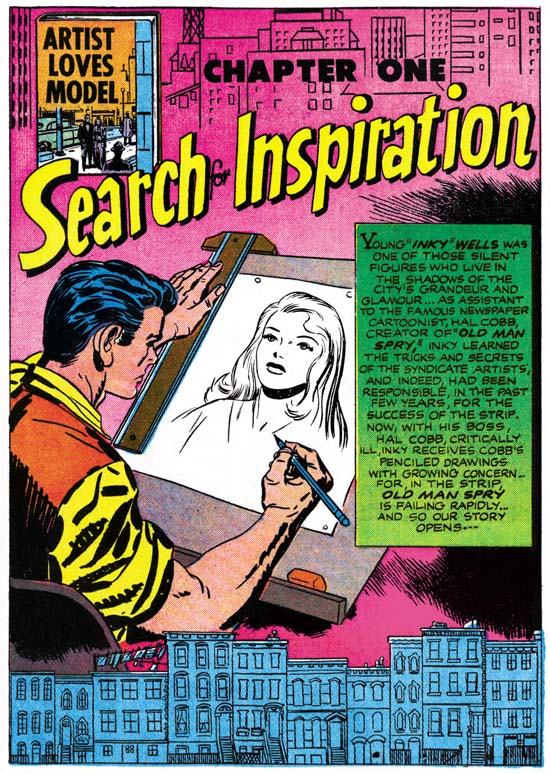
In Love #3 (December 1954) “Artist Loves Model” page 1, pencils by Jack Kirby inks by Joe Simon

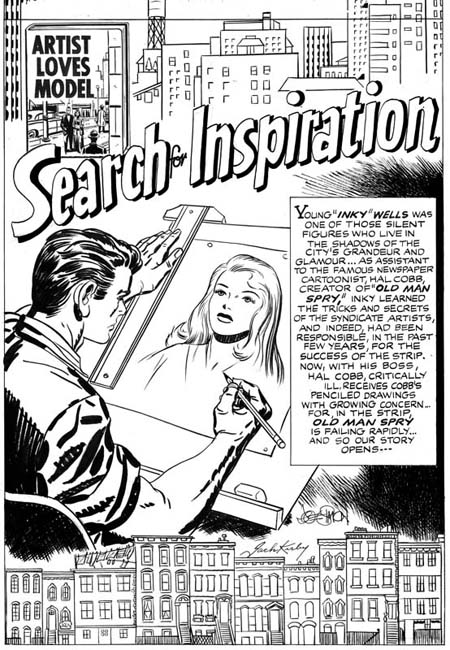
We can be certain that the published first page was newly created for the comic book version of the story, a syndication strip would not require a full page splash. I am not certain, but I believe Simon did the inking. It is even blunter then what Kirby was doing at the time without the type of control Jack usually provided. When I showed Joe this page he commented that he felt there was too many words in the caption. It is an unusually wordy introduction for a Simon and Kirby comic. This was probably due to the need to cover the part of the story which had been on the abandoned first page that I talked about above. Although I have attributed the pencils to Jack, he may not have done the rows of buildings at the top and bottom of the page. In any case the tenements on the bottom are a particularly nice touch.

Of all the stories published for the In Love title, or any other Simon and Kirby romance productions, the inclusion of “Artists Loves Model” in the romance genre is the greatest stretch. Although love plays and important part of the story it really is not the central theme. The real theme for this story concerns artistic creativity. The story follows the lead character Inky from the end of his gig as an assistant to a famous and successful syndication strip artist. We see Inky’s failed attempt at creating his own strip. Eventually our hero does accomplish his goal, but only as an unwitting accomplice to intellectual property theft. When Inky realizes what has happen he abandons his new found success and sets things right. But he has not only proved his moral integrity, but his artistic value as well. Inky ends up with a new assignment and there is little doubt that he will be very successful with it.

In Love #3
In Love #3 (December 1954) “Artist Loves Model” page 5, pencils by Jack Kirby

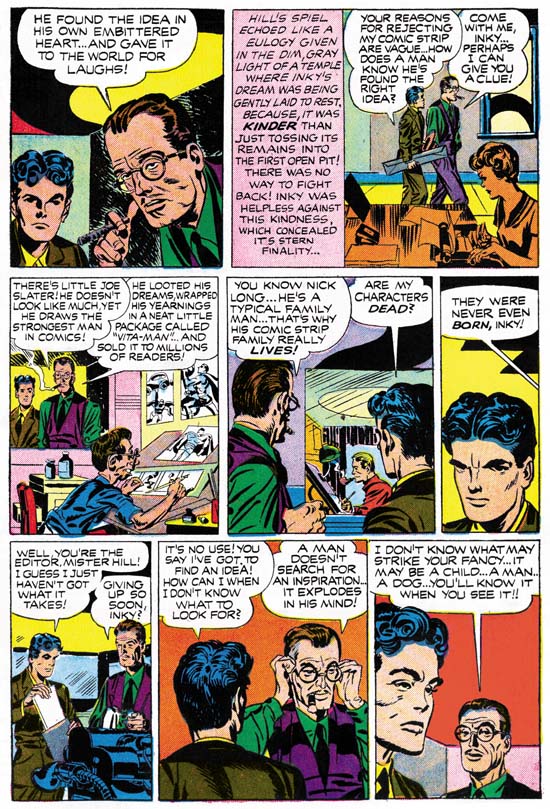
“Artist Loves Model” has significance beyond the fact that it is a great story. Both Jack and Joe gave a number of interviews later in their lives. Jack’s interviews in particular give insight into his opinions about the creative process. The prestige of comic book artists is very different from the Silver Age on. I doubt very much if anyone bothered to interviewed Kirby or Simon during their time of collaboration. Therefore “Artist Loves Model” provides a rare opportunity into what Simon and Kirby thought about creativity in comic art at that time. When syndication manager Jack Hill rejects Inky’s initial strip proposal Hill’s explanation is:

BECAUSE YOUR CHARACTERS ARE ARTIFICIAL, INKY … THEY LACK LIFE!

Later Hill makes it clear that he is not just talking about how good the drawing is:

NO EDITOR IN HIS RIGHT MIND WILL ACCEPT THAT LIFELESS CREATION, INKY! IT’S JUST A GOOD-LOOKING CORPSE!

To help Inky understand what he is saying, Hill shows two popular syndication artists at work. One, a small and skinny man, draws a Superman clone (Vita-Man), using his inner most desires as an inspiration. Another artist is a typical family man and therefore can make his comic strip family real for his readers. One particularly interesting comment is made by Mr. Hill:

A MAN DOESN’T SEARCH FOR AN INSPIRATION … IT EXPLODES IN HIS MIND!

The way this particular comment is phrased sounds so like Kirby to me. It is just the sort of thing that Jack might have said thirty years later.

Inky’s love interest is his new found manager, Donna Dreame. Donna is a very beautiful woman with a larcenous heart. Unfortunately Inky is the only one in the story who does not recognize her true nature. Donna is surprised to find that Inky has used her as a model for one of the characters in the strip they are collaborating on. However as Donna remarks:

BUT THIS GIRL … SHE’S A SWEET YOUNG THING … INNOCENT … WHOLESOME … EVERYONE’S KID SISTER …

This is the way the love blind Inky sees Miss Dreame. Donna is so taken by Inky’s idolized version of herself that she resolves to be more like the woman that the artist has portrayed. Real life has inspired art which in turn becomes a source of inspiration. I believe this is a rare presentation of a core, if unspoken, Simon and Kirby philosophy. I can think of no more capable comic book creators at that time then Simon and Kirby. Yet Joe and Jack never went to the extremes found in comics produced by companies like EC. Even before the Comic Code there was a self imposed barrier of good taste that Simon and Kirby would never extend beyond. As businessmen money was very important to them, but never to the point that Joe and Jack would compromise their product. Simon and Kirby wanted their stories to be sources of inspiration for their readers and not just a vehicle for cheap thrills.

“Artist Loves Model” is unique among the numerous Simon and Kirby productions. Unfortunately In Love #3 is probably the rarest of all the Mainline/Charlton Simon and Kirby issues. Further this story has never been reprinted. The story has no superheroes or blazing guns yet I think it is a most important story that every Simon and Kirby fan should read. Perhaps someday that will once again be possible.

The format of the In Love would change after issue #3. Never again would the title include a “book length love novel”. Nor would the stories have the unique flavor that previously even many of the backup stories had. The stories from In Love became indistinguishable from those concurrently being produced by Simon and Kirby for Young Romance, Young Love and Young Brides. I will continue scanning and restoring the remaining issues of In Love but I doubt I will be posting about them at this time. First I need to write about Simon and Kirby’s long and fruitful career in the romance genre.

Addendum:
When I wrote the above I had completely forgotten that Bob on the Jack Kirby Comics Weblog had once posted on the syndicate version of this story. I am in the process of getting a copy of Buried Treasure v1 #2 which Bob reports has 36 strips. When I do I will post on what portion of the original strip made it into the comic book story.

Next Page »