
2 Fox


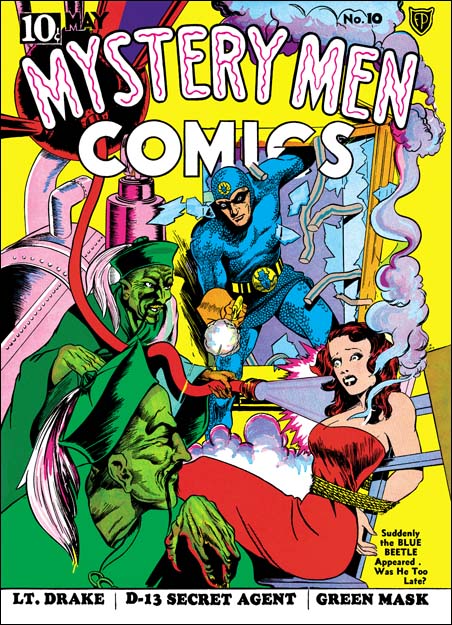
Mystery Men #10
Mystery Men #10 (May 1940) by Joe Simon

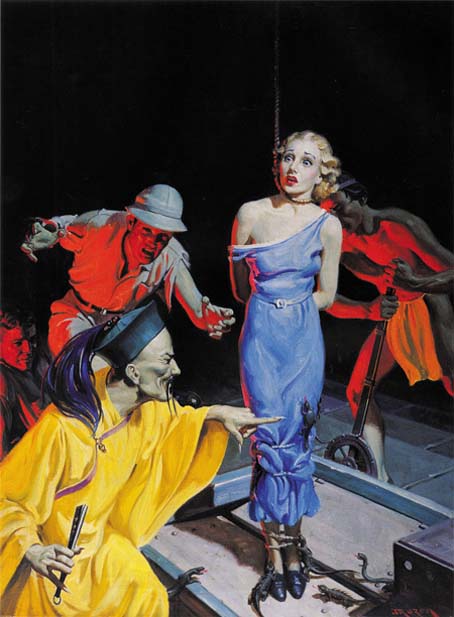
I was pleasantly surprised by a gift I received not too long ago from my niece. It was a calendar with a pulp art theme. I had never mentioned to her any interest in pulp art. In fact it is area of Americana that I have not dealt with very much. Anyway the calendar had some great art and was much appreciated. Then while in a book store I spotted “Pulp Art” by Robert Lesser. Well I really have too many books and even with its great price I was reluctant to buy it. That was until I spotted the painting from The Mysterious Wu Fang (see image below). Then I could not resist it, after all now I could consider the book as part of my Simon and Kirby research.

Now there is are four years between these two publications. Did Joe pick up a copy at a used book store or had he kept a copy from when it first came out? Who can say, but there is little doubt that Joe liked the image.

But there was also an unexpected link. When I looked at caption to the illustration of this painting in Lesser’s book it said the original was from the Steranko collection. Seems like Jim and Joe have similar tastes.

The Mysterious Wu Fang
The Mysterious Wu Fang (March 1936) by Jerome Rozen from the book Pulp Art by Robert Lesser

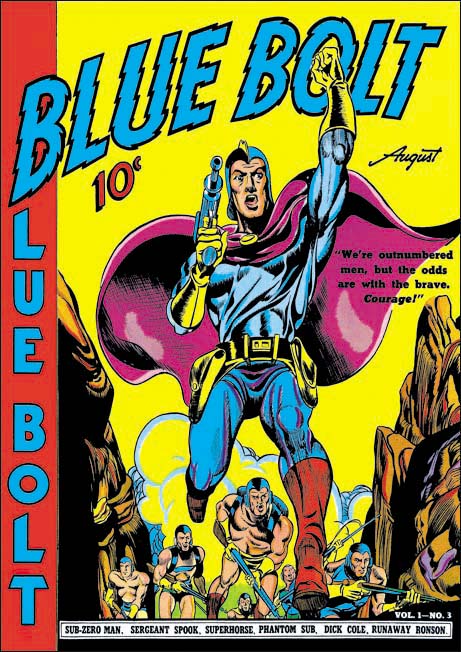
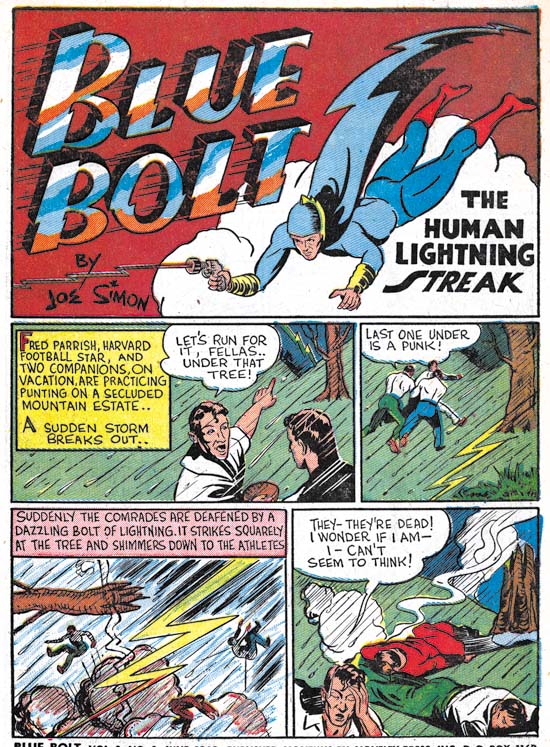
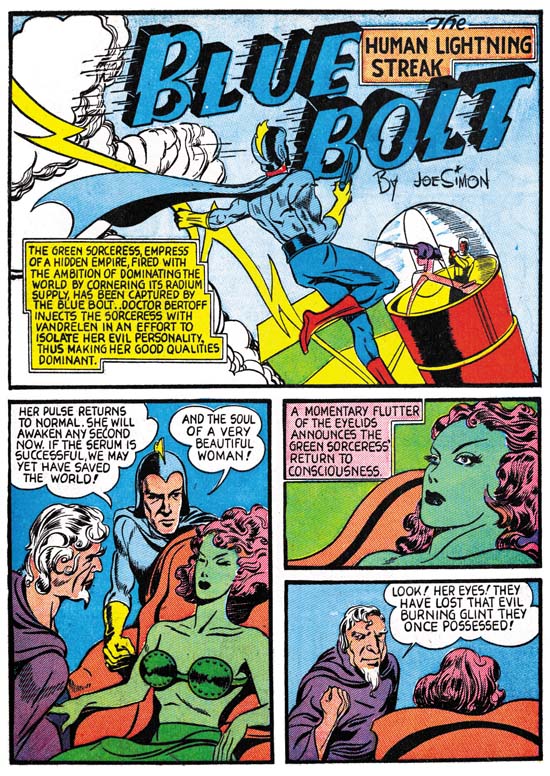
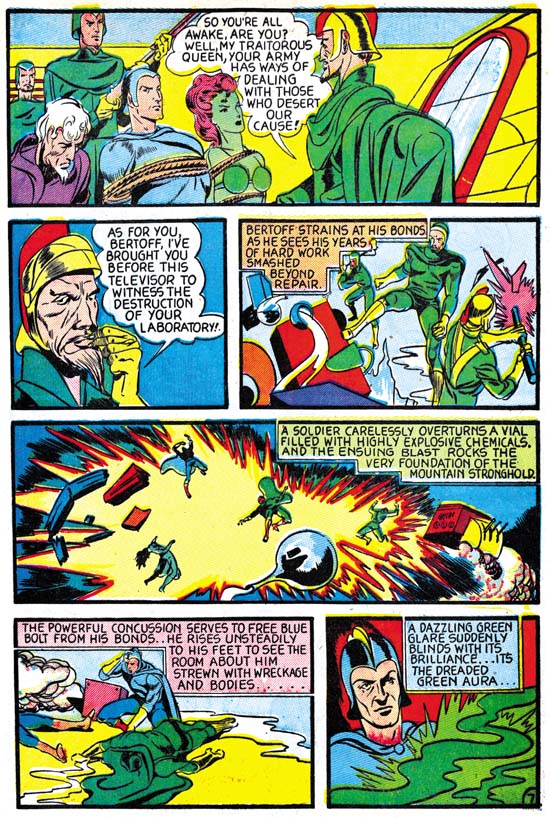
Blue Bolt #3
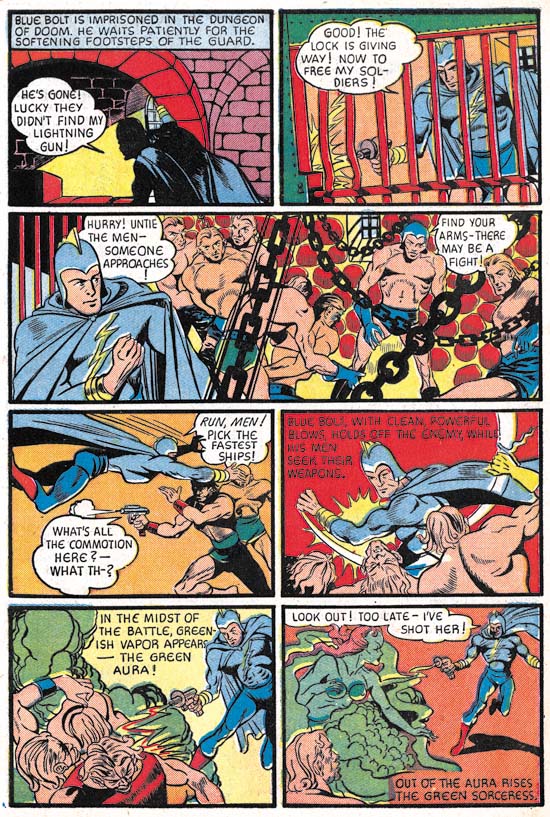
Blue Bolt #3 (August 1940) page 1

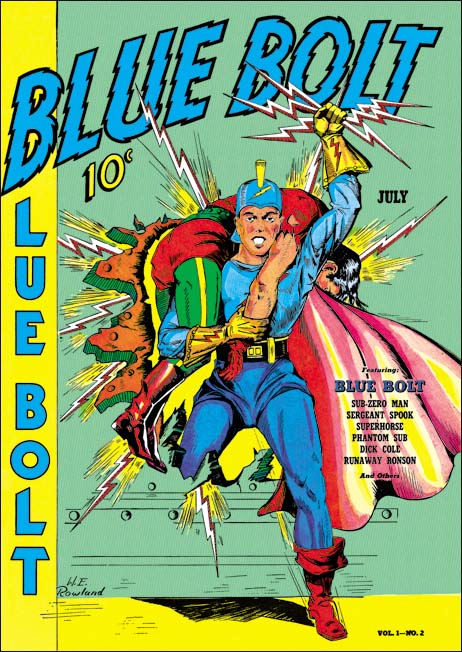
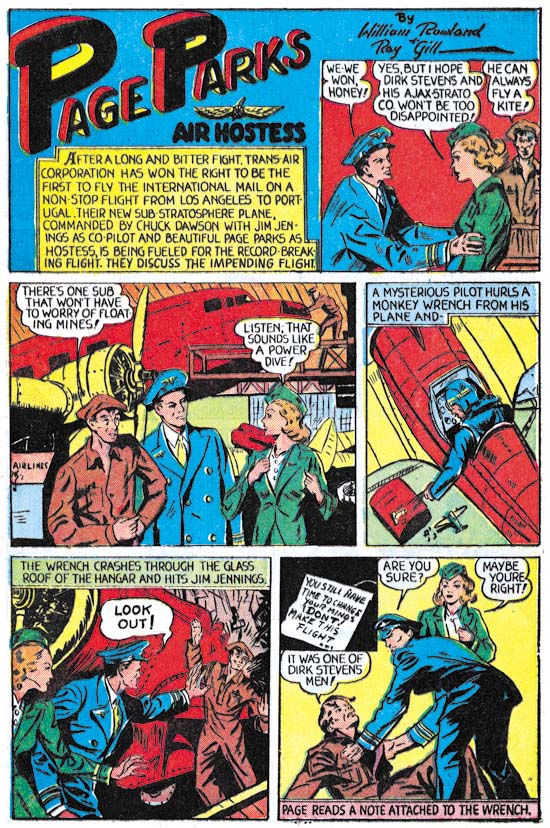
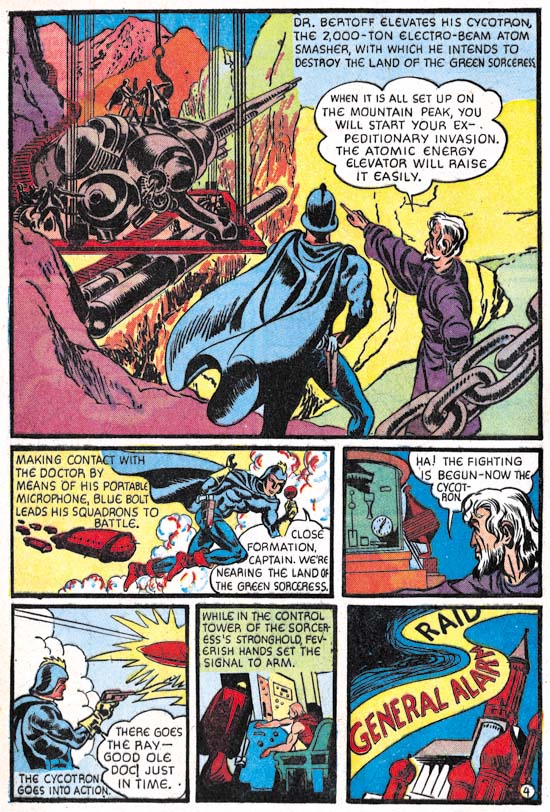
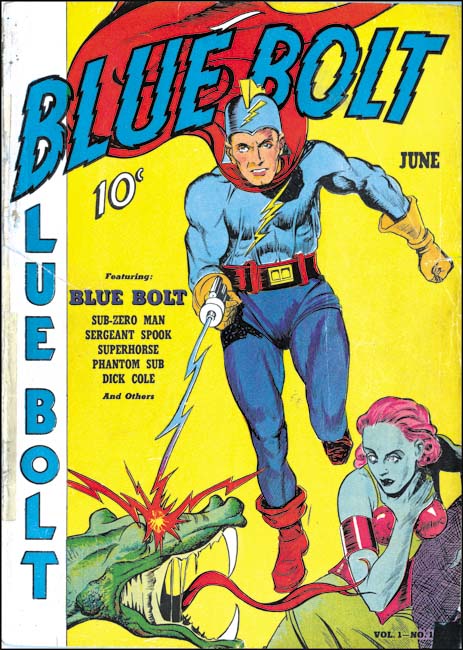
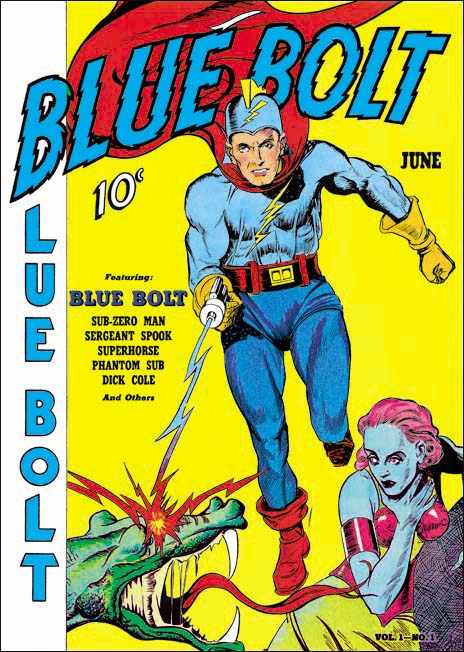
Jack Kirby met Joe Simon when the latter became art editor for Fox Comics. I find it interesting that Jack started doing actual comic book work (as opposed to syndication strips) at the same time as Joe’s first cover for Fox (May 1940). Perhaps it is just coincidence or perhaps Joe gave Jack some Fox features and may even had help Jack get work outside Fox (Crash Comics, see previous chapter). In any case it is clear that Joe quickly recognized Jack’s talent. Previously Joe had submitted a feature called Blue Bolt to Funnies Incorporated, a shop run by Lloyd Jaquet. Initially it was not used but later became the basis for a new comic title. Blue Bolt #1 came out with a cover date of June 1940. Joe did all the art for the first Blue Bolt story since it actually was done prior to his starting work at Fox. But for new issues of the comic, Joe got Jack to give him a hand. The feature in issues #2 and #3 are signed by just Joe Simon. However the art was done by both Joe and Jack, working on different pages. Jacks contribution for these issues was rather limited. For BB #2 Jack did pages 1 (except for the splash), 2, 4 and 5 while Joe did the rest of the 10 page story. For BB #3 Jack would do pages 1, 2 and 7. He may also have done page 5 but I am not sure of that.

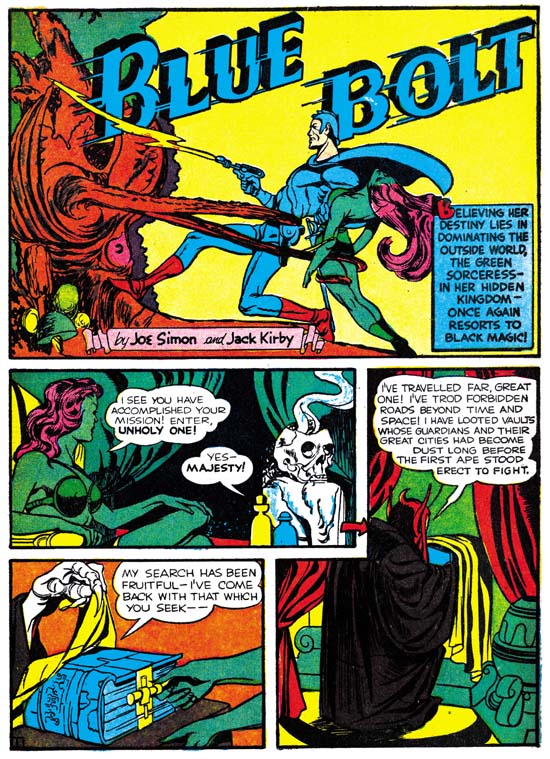
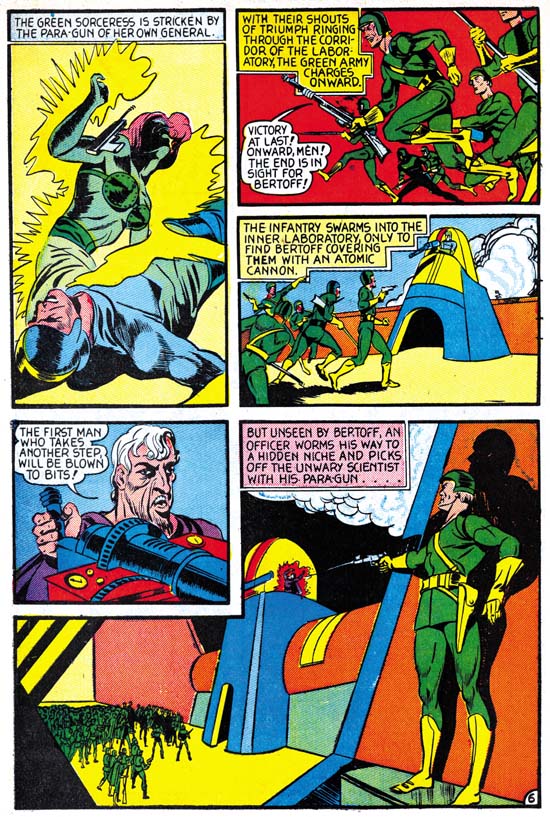
Blue Bolt #5
Blue Bolt #5 (October 1940) page 1

By issue #4 Jack was doing all the penciling as he would do for all the remaining issues. With issue #5 for the first time we find credits as “Joe Simon and Jack Kirby”. It is only fair that Joe’s name comes first, after all he created the feature. Although Joe and Jack were now working together, I think it would be a mistake to consider them at this stage as equals. Simon was art editor at Fox and after that would have the same title at Timely. People were starting to recognize Kirby’s talent but Jack had yet to have a hit. In any case once established, Simon and Kirby would be the credit order for the rest of their time together.

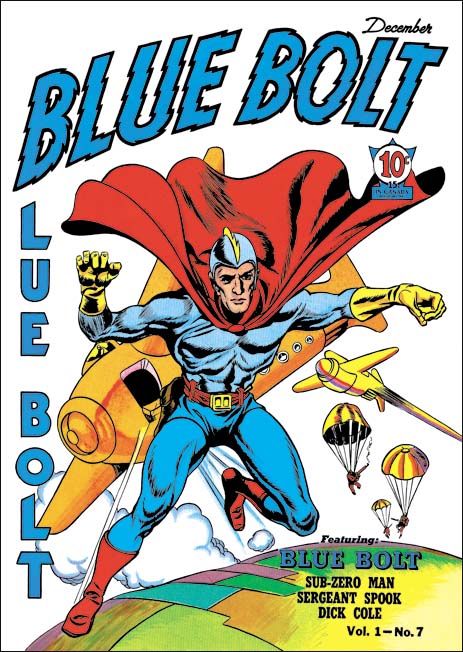
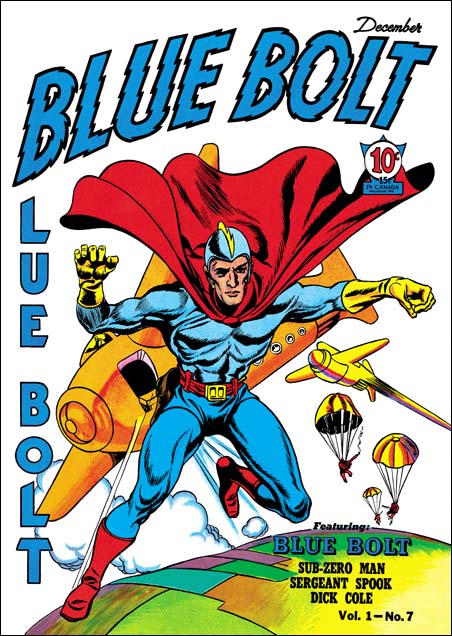
Blue Bolt #7
Blue Bolt #7 (December 1940) by Jack Kirby and Joe Simon

One surprising thing about the Blue Bolt title was how few of the covers were done by Joe or Jack. Joe alone did the cover for Blue Bolt #3. The cover for BB #7 was a joint Simon and Kirby effort. The figure of the Blue Bolt was clearly done by Jack. But the flying ships and the earth do not look like Kirby’s work. Similar blimp-like ships (without the wings) can be found on Simon’s pages from Blue Bolt #2. So I believe Joe is responsible for the background art on this cover.

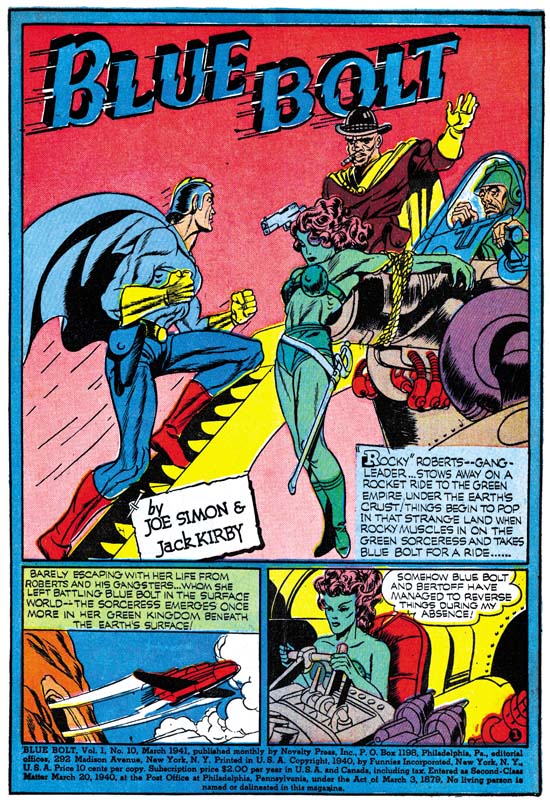
Blue Bolt #10
Blue Bolt #10 (March 1941)

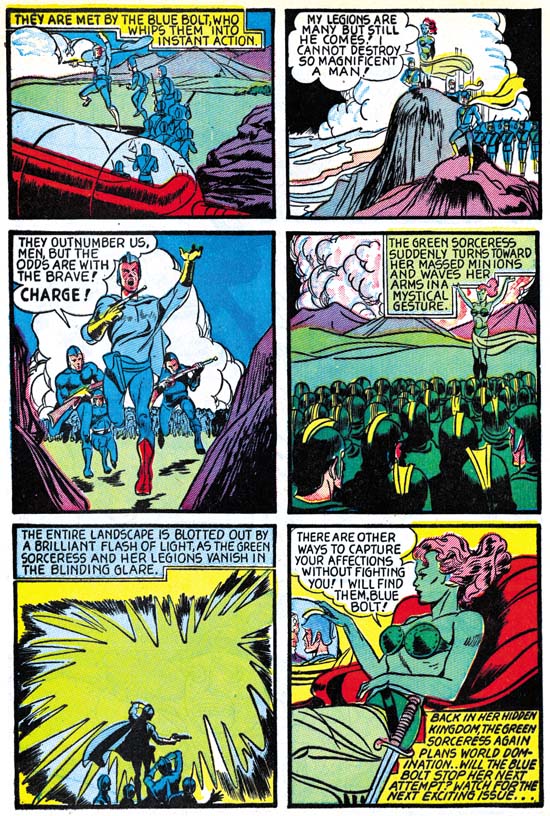
Blue Bolt was a monthly so it provides excellant examples of Kirby’s art as it rapidly improves. It is fortunate that issues #2 to #10 have been reprinted by Verotik Publishing. The book is out of print but can be found on eBay from time to time at a resonable price. Early in the series Kirby’s fight scenes were as awkward as it was in the Blue Beetle syndication. But by Blue Bolt #10 Jack was providing exciting action. The last Simon and Kirby Blue Bolt, issue #10, came out in March, the same month as the first Captain America. But S&K could not have known about how successful Captain America would be when then stopped working on Blue Bolt. Rather I suspect that Joe and Jack were just getting better page rates at that time. Since Blue Bolt was still being handled by Funnies Inc. that shop would get their cut, leaving a lower page rate for S&K.

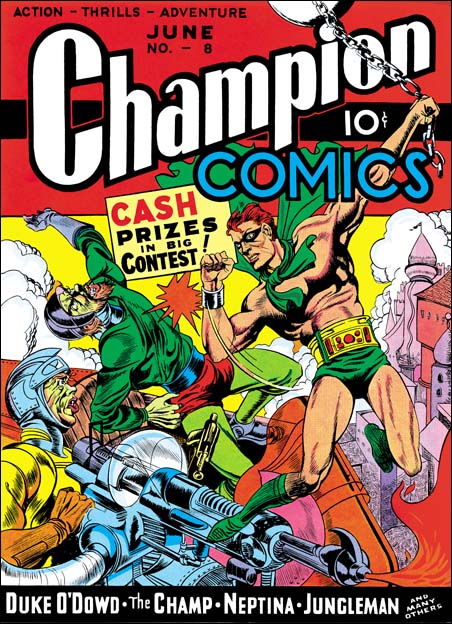
Champion Comics #9
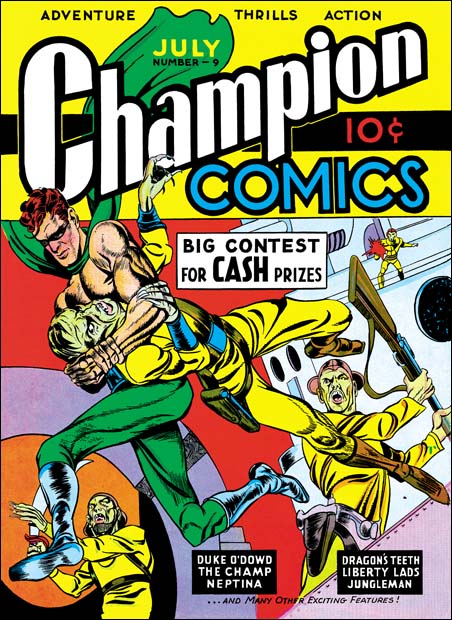
Champion #9 (July 1940)

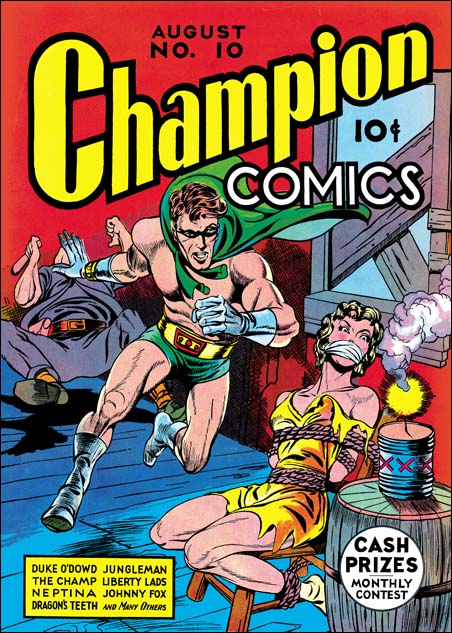
While at Fox Jack and Joe also collaborated on some covers for Champion Comics. Joe had previously done the cover for Champion #8. The cover for Champion #9 along with Blue Bolt #2 were the first Simon and Kirby joint efforts (cover dated August 1940). Champion #9 was also Jack’s first comic book cover. It was a good start, Jack’s depiction was already rather unique for the time. Still you can still see some of Joe Simon’s touch in the face of the hero. With the cover for Champion #10 we get all Kirby. Lots of action and exaggerated perspective.

Champion Comics #10
Champion #10 (August 1940)

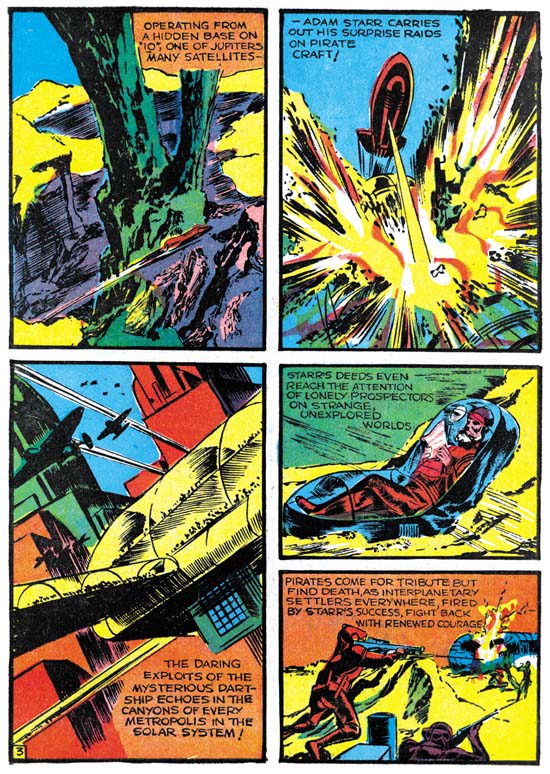
Crash Comics #1
Crash Comics #1 (May 1940) The Solar Legion page 3

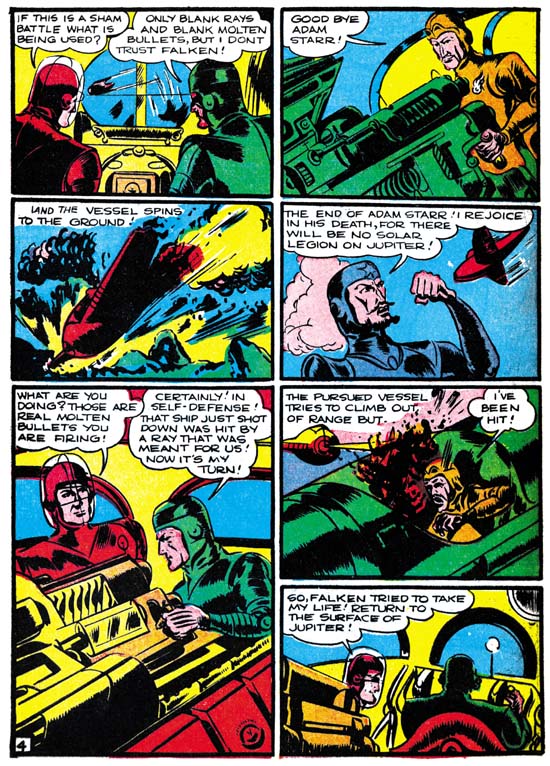
At the same time Jack Kirby drew his first comic book feature for Fox Comics he also created The Solar Legion for TEM Publishing. Jack did not sign this work, most likely he did not want to draw Victor Fox’s attention to his moonlighting. Work for The Solar Legion is a good match for what Jack did on Cosmic Carson, a good story, lots of action (particularly using spaceships), and good artwork. Kirby continues to use larger and irregularly sized panels. There seems to be a lot more emphasis on long distance views, often in exaggerated perspective, then Jack would use in his later years. The inking is the also the same, the spotting was mostly done to define form and does not play much part in the overall design.

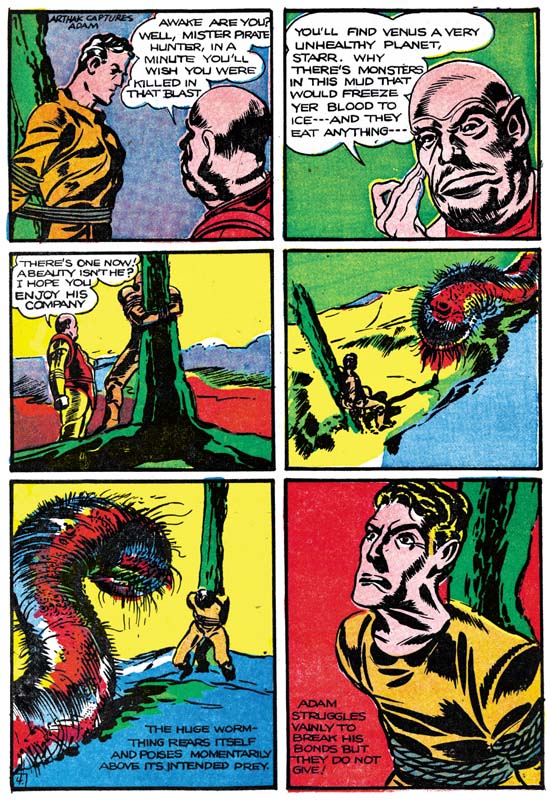
Crash Comics #2
Crash Comics #2 (June 1940) The Solar Legion page 4

One thing Jack was able to do for the first time in The Solar Legion was to draw various monsters. Besides the giant worm in the image above, there was also giant serpent like creature.

Crash Comics #5
Crash Comics #5 (September 1940) The Solar Legion page 4 by unidentified artist

Jack would create Solar Legion stories for the first three issues. Although some sources attribute to Kirby the feature in Crash #4 and #5 this appears to be incorrect. You can see in the image above from issue #5 that the artist tried to imitate Kirby, however with very limited success.

Famous Funnies #74
Famous Funnies #74 (September 1940) Lightin’ and the Lone Rider

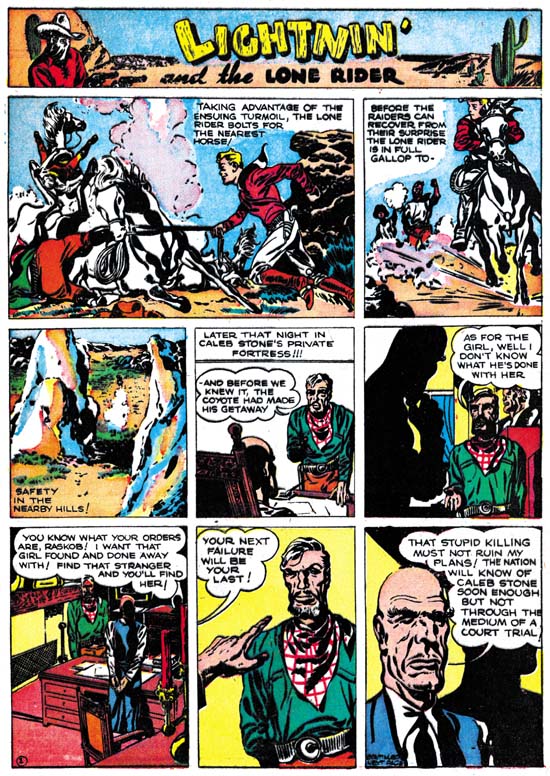
July finds the return of Lightin’ and the Lone Ride to Famous Funnies. You may remember that previous installments were, like all the other features in the comic, reprints of syndicate strips. Jack had completed one story line but the second one was neither finished or published. Now when Jack Kirby returns to the Lone Rider he starts an all new story. But this new installment is very different from the previous one. The most obvious is that the story made of three rows of panels. When the story is read it clearly was not made for syndication publication. The plot paces not one strip at a time, but rather one page at a time. This story was clearly made for publication in the comic book. The artwork is much more advance from the first appearance of Lightin’ and the Lone Rider. The Blue Beetle strip art is closest to this later Lone Rider. Particularly in the inking and the use large areas of blacks as part of the design or for depicting a character in silhouette. However the depiction of action it clearly more advance then in the Blue Beetle. This all suggests that the art was started while Jack was still at Fox Comics but not long before he left.

Famous Funnies #76
Famous Funnies #76 (November 1940) Lightin’ and the Lone Rider

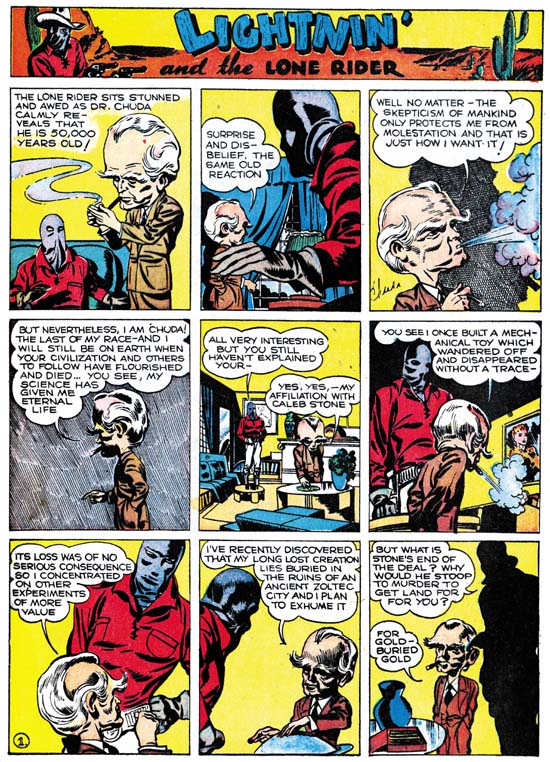
Kirby introduces into the Lone Rider story a character type that he would return to, in one form or another, thoughout his career, a small bodied man with a big head. As in the Blue Beetle, Jack has orchestrated an interesting story that he never finished. Jack leaves us completely unclear where he was going, let alone how he would end it.

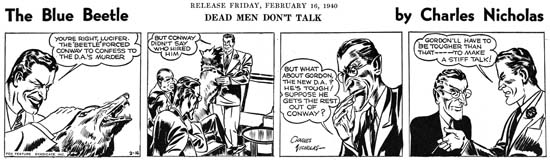
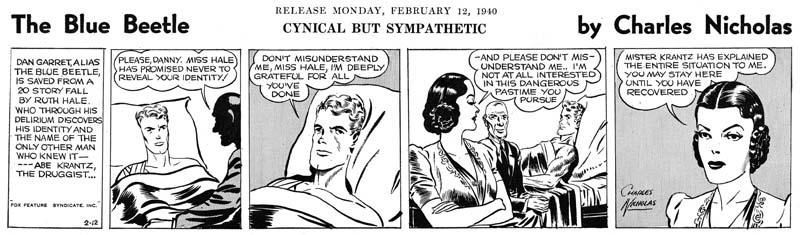
Blue Beetle (2/12/40)
The Blue Beetle (February 12, 1940)
Enlarged image

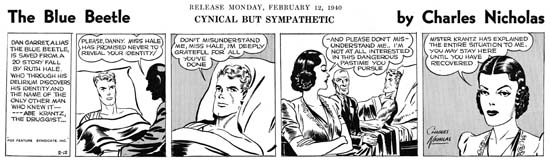
As some point Jack Kirby began working for Victor Fox, owner of Fox Comics. At Fox Kirby helped to bring to syndication a strip based on one of his comic book features, the Blue Beetle. Normally syndications strips are produced about a week before actual publication. However for a new strip a number of the daily strips would be made ahead of time so that they could be shown to perspective newspaper clients. So while the Blue Beetle strip debuted on January 8, 1940, Jack must have started working for Fox sometime well before that. Jack also did some actual comic book work for Fox that was cover dated as May. Unlike syndication strips, comic book production starts 5 to 6 months before the cover date. This means that Jack must have started at Fox at least by November or December 1939.

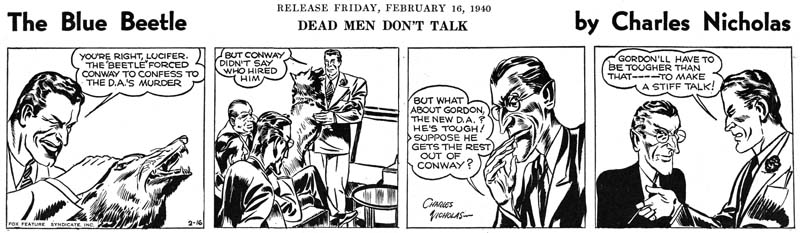
Blue Beetle (2/16/40)
The Blue Beetle (February 16, 1940)
Enlarged image

The Blue Beetle was the last syndication work that Jack did, that is until after the war. By this time he had make great progress in both his writing and his art. Jack keeps the story going well so that each daily strip is interesting and advances the storyline. No longer are there any awkward breaks in the pace like we saw in Lightning and the Lone Rider. The changes to his art were even more impressive, both in his ability to give cast members unique characterizations and in how Jack would compose each panel. However Jack’s handling of action was still rather awkward. Kirby did not stay at Fox Comics long enough to complete the story arc but what is there is fascinating reading. Unfortunately if you want to read the entire strip you cannot use “The Comic Strip Jack Kirby” by Greg Theakston that I mentioned in the last chapter. Although the book claims to have “the complete Blue Beetle” in fact one strip (February 23) is absent as it was replaced with a repeat of January 24. If you really want read the entire strip you have to get the CD version of “The Complete Jack Kirby Volume One 1917-1941″ also by Theakston.

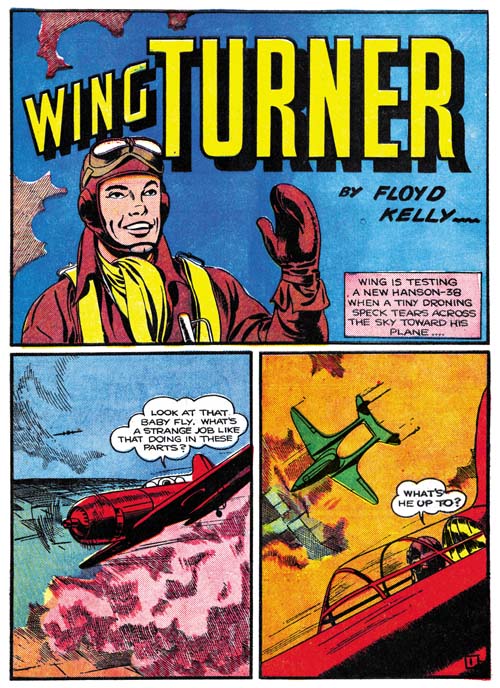
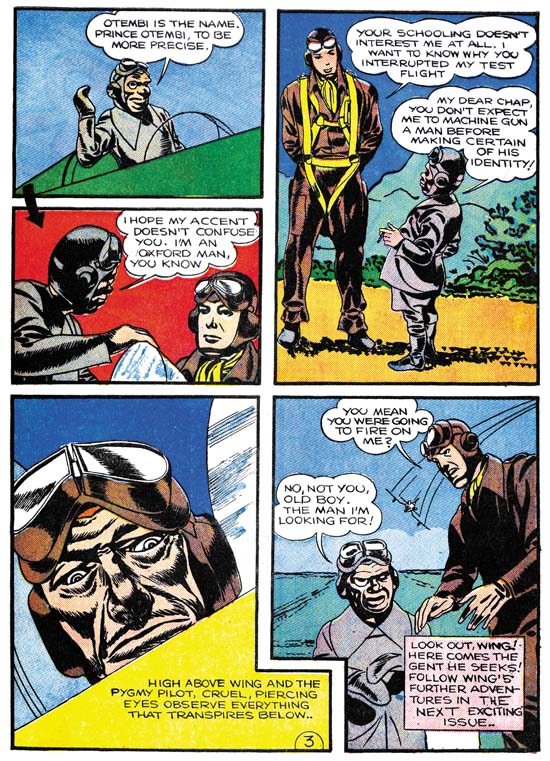
Mystery Men #10
Mystery Men #10 (May 1940) Wing Turner, page 3

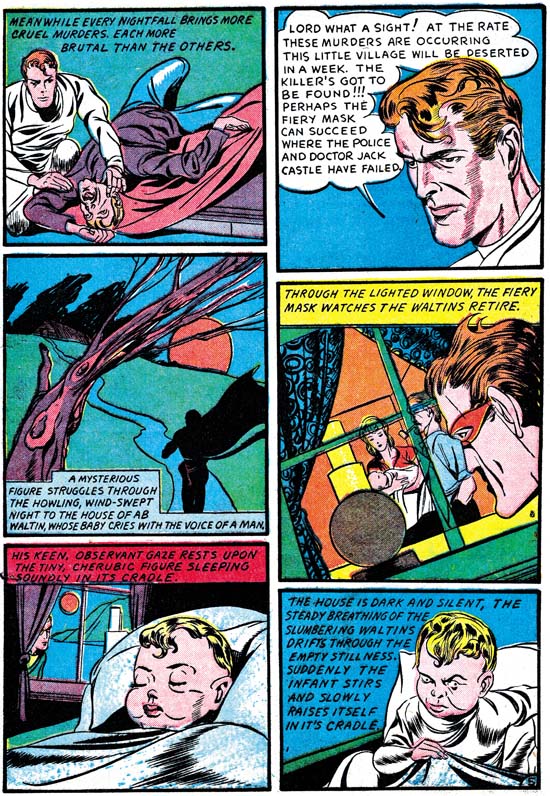
As I mentioned above, Jack also did some comic book work for Fox which were cover dated May. These two Fox features and one for TEM Publications (covered in my next chapter) were Kirby’s first real comic book work. He must have found in liberating after the years of syndication work. Jack experimented with various sized and shaped panels. The panel layouts could become so complicated that at times he needed to add arrows to direct the reading sequence. One feature Jack worked on was Wing Turner. This was signed as Floyd Kelly, but Jack was not using this as an alias. Wing Turner had part of Mystery Men Comics throughout its run. Floyd Kelly was an alias, but it was one for the original artist for this feature. All subsequent artists who worked on this feature, including Jack, were in effect ghosting. Jack’s contribution to Wing Turner is only three pages long. Like a syndication artist, Jack does an interesting story with a great setup for the next month’s installment. But Jack did not return to this feature and another artist continued it, rather poorly. However the issue following that the artist drops the original story line completely.

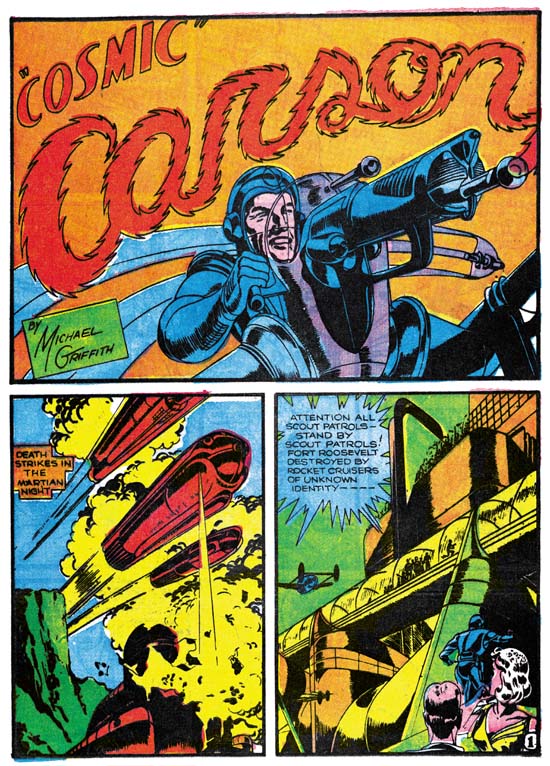
Science #4
Science #4 (May 1940) Cosmic Carson, page 1

Jack also ghosted as Michael Griffith on Cosmic Carson. I have not seen the earlier installments of this feature, but I be willing to bet they were not as exciting as what Kirby presents. You can tell Jack loves his science fiction. He provides us with a beautiful space pirate, thought controlled “mekkanos”, and an evil giant Martian.

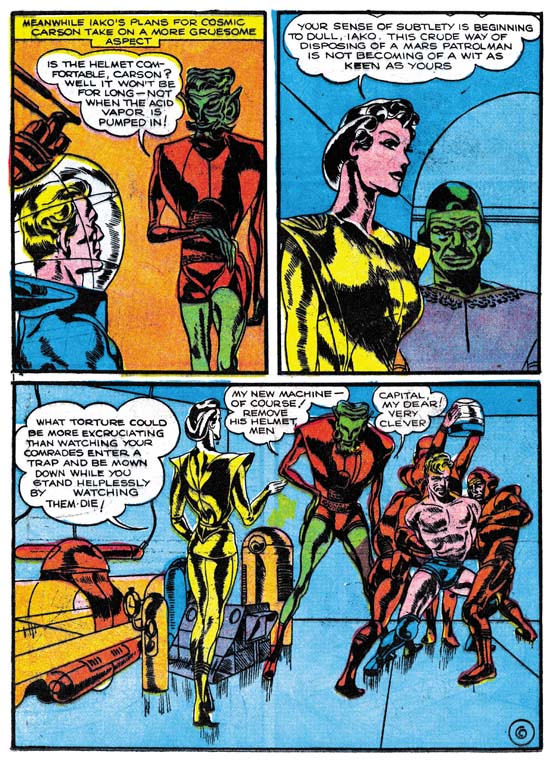
Science #4
Science #4 (May 1940) Cosmic Carson, page 6

Compared to the short Wing Turner, the eight pages for Cosmic Carson must have seemed a lot. But then again Jack preferred to use larger panels, 4 pages have only three panels on them. Jack did the inking for both of these Fox features. With the larger panels, compared to his previous syndication work, Jack was able to use more form spotting on his figures. But we do not find the effective use of large dark areas that Jack used in the Blue Beetle strips.

Besides Jack’s comic book debut, cover date May was also significant in that it marked the appearance of Joe Simon as a cover artist. This was not a coincidence. Previously Fox Comics were produced by the Eisner-Iger shop. But this business relation soured and Victor Fox started his own artist bullpen. Joe Simon was hired as editor and Jack got his chance to do comic book features. After May Kirby would do other comic book work, but not for Fox. This is rather odd as Jack’s work was well above that done be other Fox artists of this time period. When the Simon and Kirby collaboration began the work they produced was not for Fox Comics, I suspect Fox paid too poorly. But that is not a complete explanation because the S&K team up began in July. So what happened for June?

Both Greg Theakston (The Complete Jack Kirby, 1940-1941) and the Jack Kirby Checklist attribute the inking of the Space Smith feature for Fantastic Comics #10 (September 1940) to Jack. Frankly this attribution is rather astonishing to me. The inking in Fantastic #10 is so poor compared to Jack’s work at that time that it is hard to believe he could have been responsible. The splash page for Space Smith is a clear swipe from Kirby’s Cosmic Carson from Science #4 that I show above. To me it is obvious that the artist for Space Smith tried to swipe Kirby’s inking technique as well.

Wonderworld #14
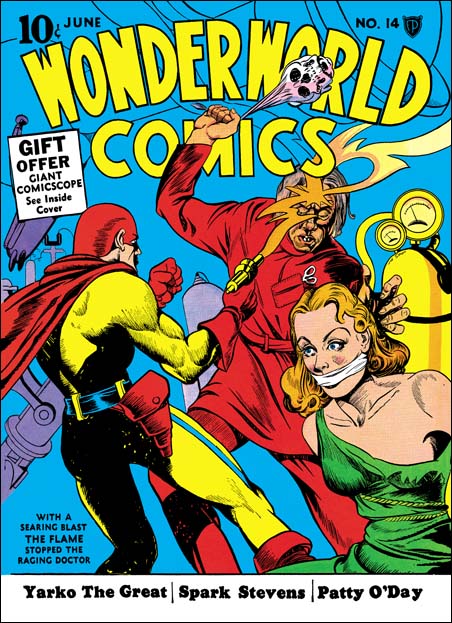
Wonderworld Comics #14 (June 1940) by Joe Simon (signed)

What makes a great comic book cover? Well many will say you need an artist capable of drawing realistic figures. Others desire intricate details and finely rendered lines. All that is well and good but for me what is needed more then anything else is a great story teller. You need someone like Joe Simon. As editor for Fox Comics Joe drew sixteen covers. Not a lot of covers but in my opinion if Joe had left comics then, never partnered with Jack Kirby, those sixteen covers alone would have entered him into the select group of the greatest golden age artists. As can be seen in the cover I am featuring for this post, Joe’s anatomy was often inaccurate. The Flame’s rib cage is much too short. Joe also had problems with form. The woman’s right bosom appears rather ample. That makes it surprising to find that even with the dress torn her left breast appears rather flat. A woman’s hair is also very important, at least for a comic cover from the 40’s. But Simon has problems in presenting curls and flowing hair. If that was all Joe had going for him this cover would have been a failure.

With a searing blast the Flame stopped the raging doctor

That is what the blurb in the lower left corner tells us. But who needs the blurb, the picture tells us all that and more. Because it is red, the villain’s clothing might not seem to belong in a laboratory. But look at the pair of scissors (or forceps?) in a pocket clearly designed for them. Obviously this is some sort of medical scientist. Mind you this is not a mild manner researcher. His gaze is intent on the woman. With one hand he reaches for her while with the other he swings a weapon. She maybe conscious at this moment but he intends that she will not be for long. And what a weapon our mad scientist has, a skull that he swings with (can that really be?) the former victim’s own hair (I bet you did not know that the hair is the last thing to detach from a decaying skull?). A skeptic might question what use would the scientist have for a beautiful woman. However anyone raising such an issue obviously is unaware that attractive young women have a long history of providing the essential ingredient for many nefarious elixirs. Hey, the eye of a newt may have been good enough for for a witch of yesteryear, but not for a modern scientific antagonist. Things would look bleak for our damsel in distress if not for the sudden appearance of the hero. Even if you are not familiar with the Flame, you can feel assured that whatever the hero has shot at his foe’s forehead has got to be effective. Once again the Flame has saved the day.

Rescuing a woman from a mad scientist was a common subject for Simon Fox covers. I have previously posted Fantastic #7 and Wonderworld #13. For WC #14 Joe has whittled the theme down to its bare essentials. The background is nothing more then a blue field. We are only provided with a few pieces of scientific apparatus to indicate that the action is taking place in a laboratory. Most of the objects have been given shades of purple. Therefore the apparatus blends with the blue background so as not to distract from the figures done largely in red, yellow and green. The only exception is the gas canister on the right which balances off nicely with the yellow of the Flame’s uniform on the left. Above, under the comics title are just the outline drawing of the gun’s flame and more equipment. This was really a smart compromise. If fully colored the upper drawing would have distracted from the title. However if the lines had been eliminated the top would have been much too plain. Joe may or man not have done the color guide, but if he did not as editor he likely have provided guidance. In any case the total design is well done.

I do not know much about the origin of the Flame. But the story inside shows him appearing out of fire such as from a criminal’s match. In a few months Simon and Kirby would create a character call the Vision for Timely. The Vision would appear out of smoke. What a surprising coincidence!

Next Page »